
Monsonia patersonii
Monsonia patersonii
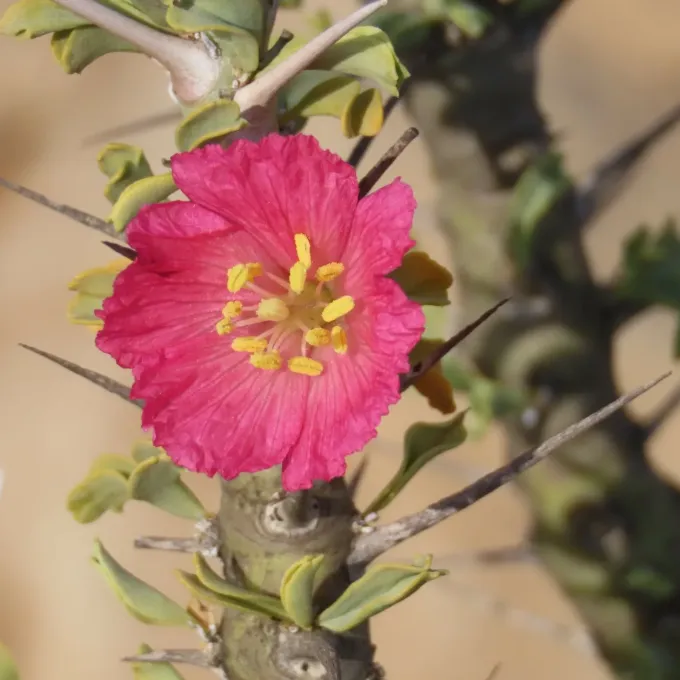
Description
Growing requirements
Monsonia patersonii is a succulent subshrub belonging to the Geraniaceae family. Native to the arid regions of Namibia and South Africa, this species has evolved unique adaptations to survive in harsh, drought-prone environments.
The botanical highlight of this plant is its woody, thickened stem base known as a caudex. This organ serves as a vital water reservoir, allowing the plant to sustain itself during extended dry periods common in its natural desert habitat.
For successful cultivation, excellent drainage is the primary requirement. Growers should utilize a gritty, porous soil mix that prevents water from accumulating around the roots, as moisture stagnation is the leading cause of plant mortality.
The plant requires high light intensity to maintain its compact growth form. During the dormant winter season, it is essential to provide a cooler environment and significantly reduce or entirely withhold water to simulate its natural cycle of dormancy.
In terms of usage, Monsonia patersonii is primarily cultivated as a premium decorative plant for specialized succulent collections. It is prized by hobbyists and botanists for its rugged, ancient appearance and its resilience, making it a masterpiece of arid-land vegetation.
Main diseases and pests
The most significant threat to Monsonia patersonii is fungal root rot, which typically occurs due to overwatering or inadequate soil drainage. Once rot sets into the caudex, the plant is often difficult to rescue, highlighting the importance of dry-side cultivation.
Pests such as mealybugs and spider mites frequently pose a problem in greenhouse or indoor environments. These pests thrive in stagnant air conditions, feeding on the succulent tissues and compromising the plant's overall health and vigor.
Preventative measures include maintaining high airflow and ensuring that the foliage remains dry at all times. Using systemic fungicides as a precaution during humid periods can help inhibit the development of common pathogenic fungi.
To address pest infestations, growers should apply targeted insecticides that are safe for succulent species. It is crucial to perform thorough inspections of the stems and leaf bases to detect early signs of pest activity before an outbreak occurs.
Proper hygiene, such as removing debris from the container surface and ensuring clean growing conditions, significantly reduces the likelihood of disease. With diligent care and a focus on environmental control, this species can thrive for many years.