
Monsonia nivea
Monsonia nivea
Description
Growing requirements
Monsonia nivea is a fascinating herbaceous plant belonging to the Geraniaceae family. In its natural habitat, it manifests as a resilient semi-shrub, specifically adapted to survive in extreme desert and semi-desert conditions.
The native range of this species covers the arid regions of Northern Africa and the Middle East. It typically thrives in sandy and rocky desert landscapes, where high temperatures and prolonged drought are standard environmental stressors.
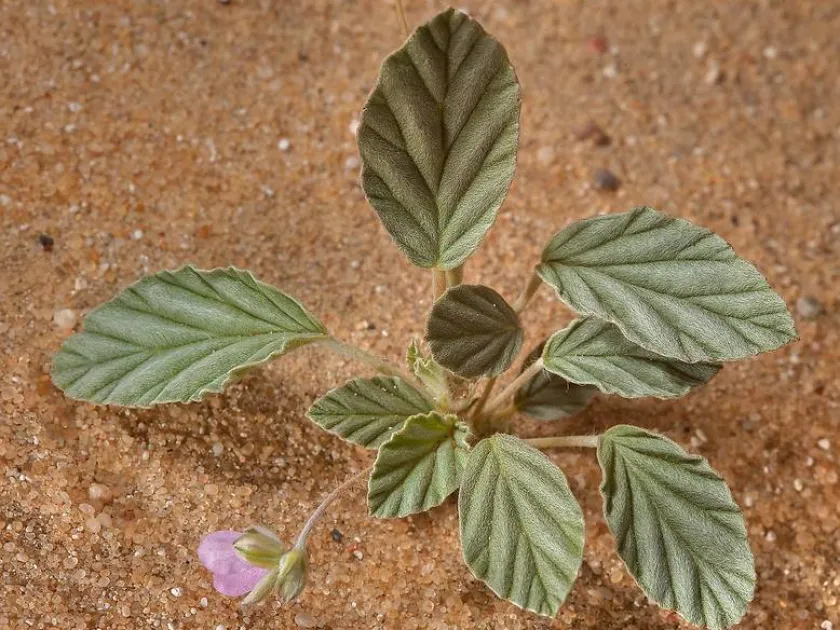
Botanically, the plant is characterized by a deep taproot system and densely pubescent leaves. The silvery hairs serve as a vital protective mechanism, reflecting solar radiation and significantly reducing transpiration to conserve internal water reserves.
Successful cultivation requires highly aerated soil, typically sandy or sandy-loam substrates with minimal organic matter. Excellent drainage is non-negotiable, as the species is highly susceptible to root rot if exposed to water stagnation.
The plant demands high light intensity throughout the growing season. In indoor or controlled agricultural environments, adequate exposure to direct sunlight is essential to maintain the plant's natural compact growth habit and overall physiological health.
Main diseases and pests
The primary threats to Monsonia nivea in agricultural practice are fungal pathogens, which proliferate rapidly in damp or poorly drained soil. Such conditions almost invariably lead to root and collar rot, which can be fatal to the plant.
Pests such as spider mites may pose a risk in greenhouse environments, particularly when air humidity remains consistently low for extended periods. These mites feed on the sap, damaging the leaves and reducing the plant's vitality.
Disease management relies heavily on preventative measures, specifically careful irrigation scheduling. Ensuring the substrate dries out completely between waterings is the most effective way to prevent the development of pathogenic fungi.
For pest control, appropriate acaricides may be applied; however, caution is required due to the sensitive nature of the plant's hair-covered leaf surfaces. Biological controls are preferred in controlled settings to avoid chemical stress.
Maintaining optimal environmental stability is the best strategy against threats. When grown in alignment with its specific ecological requirements, the plant demonstrates high resistance to diseases, provided the soil moisture is kept strictly managed.