
Wax agave
Echeveria agavoides Lem.
Description
Sowing dates
Propagation of Echeveria agavoides is commonly performed through seeds or vegetative cuttings. Seed sowing is typically conducted in late winter in a sterile, well-draining substrate to prevent dampening-off disease.
Optimal germination requires consistent temperatures between 20 and 25 degrees Celsius. The seed trays must be kept in a bright location but shielded from intense, direct sun until the seedlings are strong enough to be transplanted.
Vegetative propagation via leaf cuttings is a highly effective method. The leaf should be cleanly detached from the rosette and allowed to callous in a dry, shaded area for several days before being placed on a rooting medium.
Once roots develop, the young plantlets can be moved into individual small pots. Using a sandy, fast-draining potting mix is essential to prevent root rot in these fragile juvenile plants.
During the propagation phase, keeping the soil slightly moist is necessary for root development, but as the plant matures, irrigation should be shifted to a wet-dry cycle.
Growing requirements
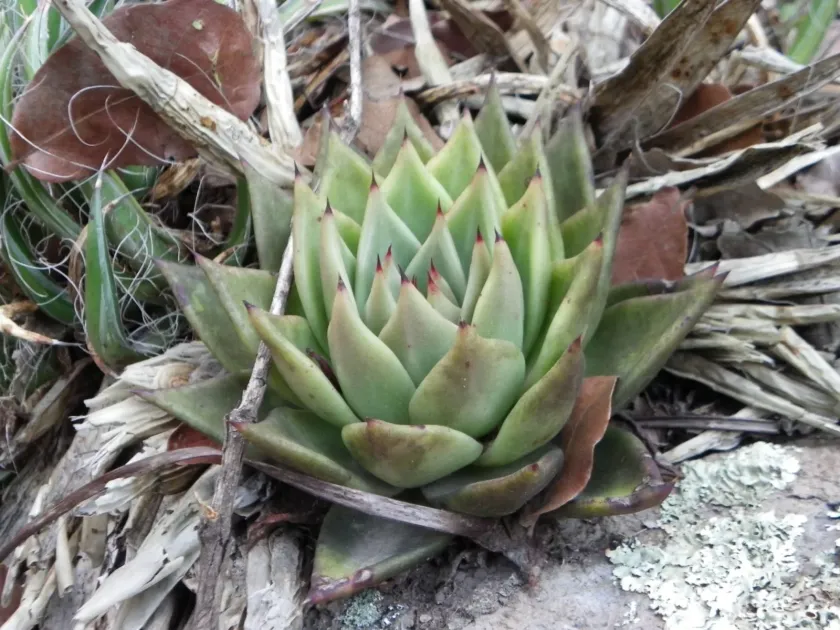
Echeveria agavoides is a popular member of the Crassulaceae family, native to the rocky landscapes of Mexico. It is prized for its thick, triangular leaves that form a compact, agave-like rosette.
The plant thrives in full sunlight, which is crucial for maintaining its compact shape and vibrant leaf tips. Without sufficient light, the plant will become etiolated, losing its characteristic aesthetic appeal.
Soil requirements for this species are minimal regarding nutrition but high regarding drainage. A standard cactus and succulent mix, often supplemented with perlite or pumice, provides the ideal environment for the root system.
Watering must be done carefully, ideally using the soak-and-dry method. During the active growing season, water thoroughly, then allow the soil to become completely dry before the next watering session.
Temperature management is straightforward: it tolerates warm summers well, but requires a cooler dormant period during winter, ideally maintained at 10–15 degrees Celsius to encourage healthy spring growth.
Main diseases and pests
The most common threat to this succulent is fungal rot resulting from overwatering or high humidity around the crown. Ensuring good air circulation is the best preventative measure against these infections.
Mealybugs are the primary pest concern, often nesting deep within the leaf axils. Periodic inspections and immediate treatment with insecticidal soaps or systemic pesticides are effective ways to manage infestations.
Spider mites may occasionally occur if the surrounding air is excessively dry. These pests damage the epidermis of the leaves, leaving unsightly marks that do not heal over time.
Prevention relies heavily on proper horticultural hygiene, including removing dead leaves from the base of the rosette to prevent decay. Clean tools are also essential to avoid transferring pathogens during propagation.
Proper drainage at the bottom of the pot is a critical design feature in agricultural settings for this crop. Without a reliable drainage hole, the risk of lethal root rot increases significantly during the dormant winter phase.