
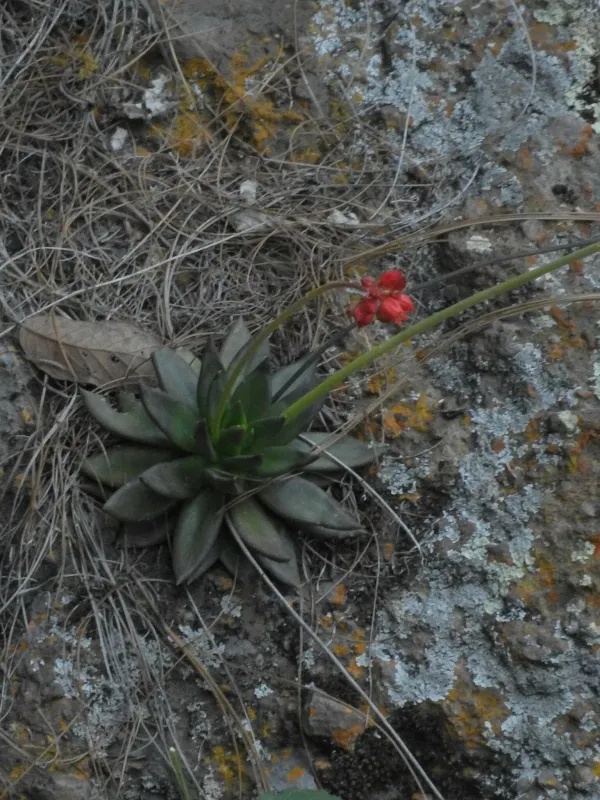
Echeveria hybrid Affinis x Runyonii
Echeveria affinis E. Walther x Echeveria runyonii Rose ex E. Walther
Description
Growing requirements
Echeveria hybrid (Echeveria affinis x Echeveria runyonii) belongs to the Crassulaceae family. This interspecific hybrid combines the dark, intense foliage colors of Echeveria affinis with the unique, elegant leaf structure of Echeveria runyonii.
The plant requires high light intensity to maintain its compact rosette shape. If grown in low light conditions, the plant will become leggy and lose its characteristic color intensity, which is a common issue in indoor cultivation.
The substrate must be highly porous and well-draining. A typical mix includes succulent potting soil blended with coarse sand, perlite, or pumice to ensure that roots do not remain damp for extended periods.
Optimal growth occurs at temperatures between 20 and 25 degrees Celsius. During the winter dormancy, the plant should be kept in a cooler environment, ideally around 10 to 15 degrees Celsius, to mimic its natural environment.
Watering must be approached with caution. During the growing season, allow the soil to dry out completely between waterings. In winter, reduce watering frequency to once a month or less to prevent the roots from rotting.
Main diseases and pests
The primary threat to this hybrid is overwatering, which quickly leads to fungal infections and root rot. Keeping the soil consistently moist is the most common mistake that leads to plant loss.
Mealybugs are the most frequent pests affecting this Echeveria. They tend to hide in the tight crevices of the rosette and at the base of the leaves, where they extract plant sap and weaken the host.
Management involves using systemic insecticides or applying isopropyl alcohol directly to the insects if the infestation is caught early. Keeping the area around the base of the plant clean is also essential.
Good ventilation is critical to prevent pest outbreaks and disease. Plants should not be crowded together, as stagnant air promotes the development of moisture-loving pests and fungal pathogens.
Monitoring the foliage for signs of wilting, discoloration, or sticky residue is part of a standard health check for any succulent collection. Early intervention is the key to maintaining a healthy specimen.