
Echeveria carnicolor
Echeveria carnicolor (Baker) É. Morren
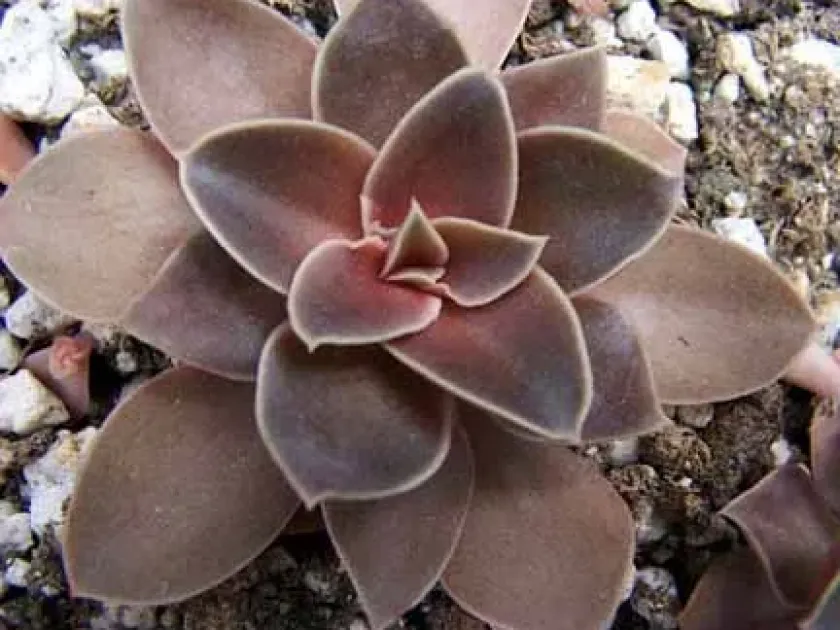
Description
Sowing dates
Propagation of Echeveria carnicolor is primarily achieved through leaf cuttings or offset division. Spring is the most suitable season for this process, as the increased day length and light intensity support rapid root development and establishment of young plants.
When using leaf cuttings, it is crucial to allow the cut surface to callus over for several days before placing it on the substrate. This prevents fungal pathogens from entering the leaf tissue, which is the most common cause of failure in succulent propagation.
Seed propagation is also possible but requires significant patience and specific environmental control. The fine seeds should be sown on top of a well-draining, sterile substrate and kept under high-humidity conditions initially, then gradually acclimated to drier air.
Young plants should be kept in bright, indirect light to prevent legginess during their critical early growth stages. Transplanting into individual pots should occur only after the root system has sufficiently developed to anchor the plant.
Maintaining cleanliness during the propagation phase is vital. Always use sanitized tools and fresh, porous growing media to ensure that young Echeveria plants start their growth cycle without exposure to soil-borne pathogens.
Growing requirements
Echeveria carnicolor, a member of the Crassulaceae family, is native to the rocky landscapes of Mexico. As a true succulent, it demands high-intensity light to maintain its characteristic compact rosette shape and vibrant foliage colors.
The substrate must be specifically formulated for cacti and succulents, emphasizing excellent drainage. A mix of pumice, coarse sand, and high-quality potting soil provides the necessary aeration to prevent the roots from suffocating in stagnant water.
Watering requires a careful balance; the soil must be allowed to dry out completely between waterings. During the winter dormancy period, watering should be significantly reduced, as the plant's metabolic activity slows down considerably in lower temperatures.
The plant thrives in low-humidity environments and is well-adapted to typical household air conditions. Excessive humidity or stagnant air around the leaves can encourage the development of rot and opportunistic fungal growth.
Optimal temperature management involves keeping the plant between 20–28 degrees Celsius during the growing season. In winter, a cooler environment of 10–15 degrees Celsius helps mimic the plant's natural habitat, promoting healthy growth cycles.
Main diseases and pests
The most significant threat to Echeveria carnicolor is overwatering, which rapidly leads to root rot and collapse of the entire rosette. Signs include soft, translucent, or yellowing leaves, which often detach with minimal pressure when the plant is compromised.
Mealybugs are the most persistent pest for this species, often hiding in the dense crevices of the rosette. Regular inspection is necessary, and systemic insecticides or targeted applications of alcohol-based solutions are typically used to control infestations.
Spider mites may occasionally occur, especially in dry, poorly ventilated areas. These pests cause fine webbing and stippling on the leaves, which can lead to permanent scarring if left untreated with appropriate miticides.
Fungal issues such as leaf spot or powdery mildew can arise if the plant is kept in damp, dark conditions. Proper airflow is the best preventative measure against these threats, keeping the foliage dry and healthy.
- Ensure pots have adequate drainage holes.
- Keep the foliage dry during watering.
- Periodically check the underside of leaves.
- Avoid overcrowding plants to promote airflow.