
Echeveria hybrid
Echeveria affinis E. Walther x E. pulidonis E. Walther
Description
Growing requirements
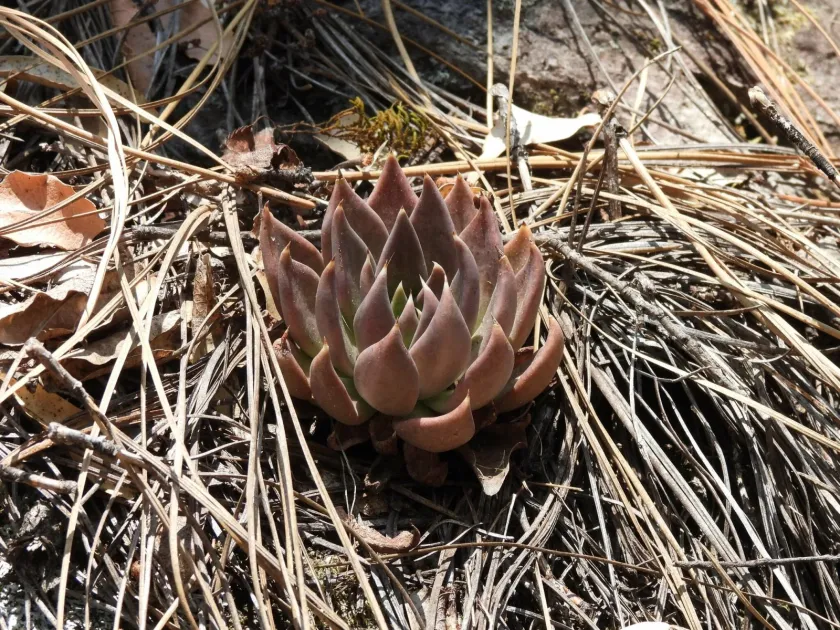
The Echeveria hybrid is a cultivated succulent belonging to the Crassulaceae family, specifically developed from the cross-breeding of Echeveria affinis and Echeveria pulidonis. It is highly valued for its geometric rosette shape and striking leaf colors that intensify under direct exposure to sunlight.
For optimal growth, this plant requires a location with bright, indirect light or some direct morning sun. Proper lighting is crucial to prevent etiolation, where the plant stretches and loses its characteristic compact form, becoming weak and pale.
The soil requirements focus on excellent drainage. A gritty, porous substrate mix consisting of potting soil, perlite, and coarse sand or pumice is essential to ensure that water does not remain trapped around the root system for extended periods.
Watering should follow the soak-and-dry method. During the active growing season, water thoroughly until it runs out of the drainage holes, then wait for the soil to dry out completely before the next watering session to simulate the natural arid environment.
Temperature management is key: the hybrid thrives in temperatures between 20 and 25 degrees Celsius during the day. In winter, a cooler period at 10 to 12 degrees Celsius helps the plant enter dormancy, which is beneficial for its longevity and health.
Main diseases and pests
Root rot is the most significant threat to the Echeveria hybrid, usually caused by overwatering or poor drainage. This condition can quickly damage the crown and lead to irreversible decay.
Mealybugs are the most common pests affecting this plant. They tend to cluster in the tight spaces between leaves and at the base of the rosette, appearing as white, cotton-like masses and severely weakening the host plant.
Spider mites can also cause issues, particularly in dry and poorly ventilated indoor environments. Infestations are often identified by fine webbing and yellowing or stippling on the succulent leaves.
Fungal leaf spot diseases may occur if the plant is kept in humid conditions with poor airflow. It is important to keep the crown dry and avoid getting water directly into the rosette center during irrigation.
Early detection of pests and pathogens is vital. Removing dead, lower leaves and maintaining a clean growing area are effective cultural practices to reduce the likelihood of pest outbreaks and fungal spread.