
Sticky sandwort
Minuartia viscosa
Description
Growing requirements
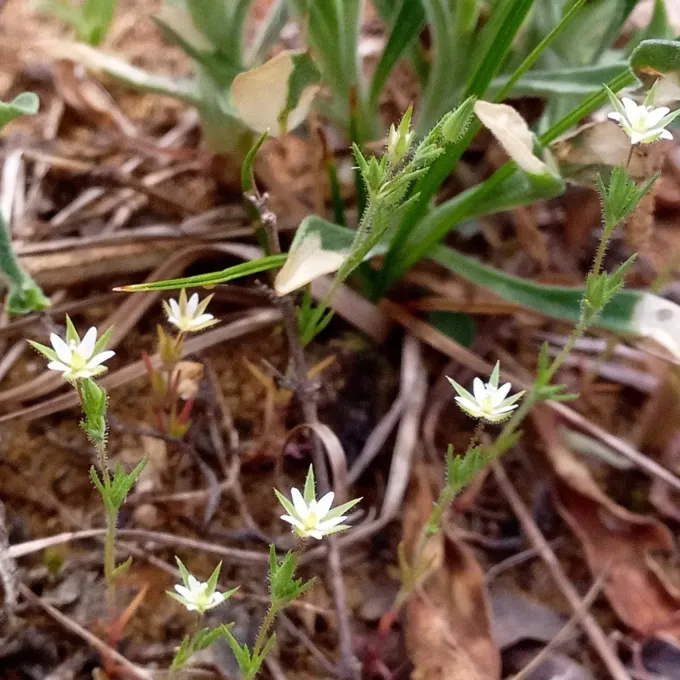
Sticky sandwort (Minuartia viscosa) is an annual herbaceous plant belonging to the Caryophyllaceae family. Naturally, it thrives in Mediterranean climates, typically colonizing rocky, arid habitats where other, more demanding plant species fail to establish themselves.
The plant is defined by its glandular hairs covering the stems, which provide a sticky texture to the touch. This morphological adaptation is a protective strategy against desiccation and helps the plant survive in nutrient-poor, sandy soils that are characteristic of its native range.
Cultivation requires specific soil conditions to mirror its natural habitat. It performs best in well-draining, gravelly, or sandy soils with a neutral to slightly alkaline pH. Any tendency for the soil to become waterlogged must be avoided to prevent root rot.
Full sun exposure is a non-negotiable requirement for the healthy development of Minuartia viscosa. The plant relies on intense solar radiation to trigger flowering and to maintain its compact growth habit, preventing it from becoming leggy or weak.
Management of this crop involves precise irrigation timing, ensuring the soil dries out significantly between water applications. Providing adequate air circulation around the plants is also essential to manage the humidity levels and prevent fungal diseases that often affect sticky-stemmed species.