
Arctic sandwort
Minuartia arctica
Description
Growing requirements
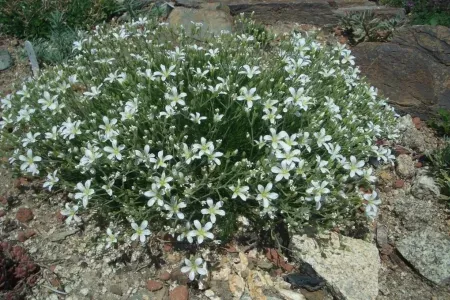
Arctic sandwort (Minuartia arctica) is a perennial herbaceous plant belonging to the Caryophyllaceae family. It is renowned for its low-growing, mat-forming habit, specifically evolved for life in harsh, rocky environments of the arctic tundra and alpine zones.
The plant originates from the northern regions of Eurasia and North America. Its natural habitat consists of stony soil, gravel beds, and crevices where drainage is optimal, making it an excellent candidate for specialized rock gardens and xeriscaping.
To thrive in a garden setting, it requires full sun exposure and a gritty, inorganic soil substrate. Poor drainage is the primary cause of failure; therefore, it is essential to incorporate plenty of coarse sand or grit into the planting medium.
Temperature management is not a concern regarding cold hardiness, as the species is adapted to sub-zero temperatures. However, it requires a cool, dry climate during the growing season to maintain its compact growth form and prevent physiological stress.
Routine care involves minimal intervention. It does not require frequent feeding, as high-nutrient soils often lead to leggy, less attractive growth that is susceptible to environmental damage.
Main diseases and pests
The most significant threat to Minuartia arctica is root rot caused by poor drainage and excessive winter moisture. If the soil remains saturated for prolonged periods, the core of the mat will quickly succumb to fungal decay.
In humid garden environments, foliage may be prone to powdery mildew. Careful site selection, ensuring good air circulation around the plants, is the most effective preventative measure against such diseases.
Harvesting
While not a traditional agricultural crop, harvesting for the purpose of propagation involves collecting seeds once capsules are mature in late summer. Care should be taken to ensure the environment is dry during the seed collection process.