
Minuartia biflora
Minuartia biflora
Description
Growing requirements
Minuartia biflora, commonly known as the two-flowered sandwort, is a herbaceous perennial plant belonging to the Caryophyllaceae family. It is a circumpolar species that thrives in harsh, cold environments across the Northern Hemisphere.
The distribution range of this plant includes Arctic regions of Europe, Asia, and North America. It is typically found in high-latitude tundra, alpine scree slopes, and open, gravelly areas where competition from other vegetation is minimal.
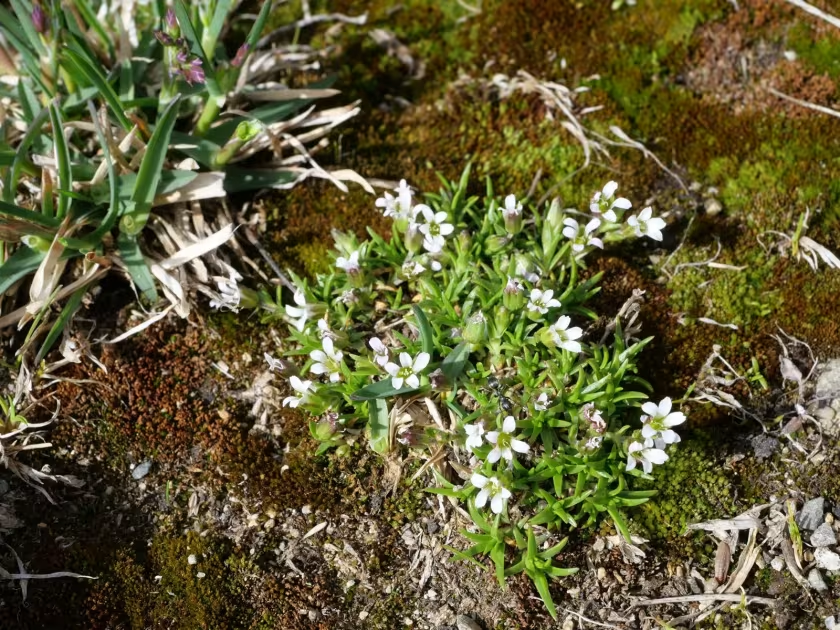
Botanically, the plant is characterized by its small, tufted growth habit and slender stems that typically support one or two flowers. These flowers are small and white, reflecting the plant's strategy of investing energy into survival rather than mass reproduction in nutrient-poor soils.
The environmental requirements for Minuartia biflora are strict: it demands excellent drainage, cool ambient temperatures, and high solar radiation exposure. It is highly sensitive to soil compaction and is generally intolerant of excessive fertilizer application or rich organic matter.
From a functional standpoint, Minuartia biflora is not treated as a commercial agricultural crop. Its value lies primarily in ecological research, where it serves as an indicator species for climate change impact studies and a reference for understanding plant adaptation to extreme alpine and arctic niches.