
Austrian sandwort
Minuartia austriaca
Description
Growing requirements
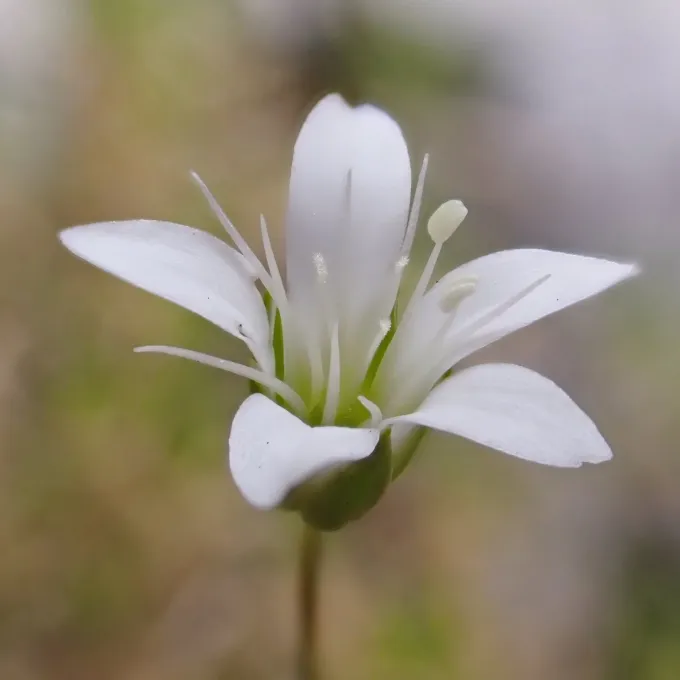
Austrian sandwort (Minuartia austriaca) is a herbaceous perennial belonging to the family Caryophyllaceae. Native to the alpine regions of Central Europe, this plant is specifically adapted to survive in harsh, high-altitude environments characterized by rocky substrate.
Botanically, it is classified as a cushion-forming plant. Its dense growth habit, consisting of fine, needle-like leaves arranged in tight rosettes, allows it to withstand extreme temperature fluctuations and maintain moisture integrity despite intense exposure to mountain winds.
Regarding cultivation requirements, Minuartia austriaca demands excellent soil drainage. It thrives in gritty, alkaline, or neutral soils that provide minimal nutrient content. Heavy clay or nutrient-rich garden soil will typically cause the root system to fail.
This species requires full sun to maintain its structural integrity and health. Inadequate light levels lead to etiolated, sparse growth that ruins the plant's characteristic cushion shape. It is highly resistant to frost and cold stress, reflecting its natural habitat.
Economically and horticulturally, this plant is primarily utilized in rock gardens, scree beds, and alpine troughs. It provides significant aesthetic value as a stable groundcover that mimics natural alpine flora and suppresses weed development in specialized landscaping.
Main diseases and pests
The primary threat to the stability of an Austrian sandwort population is root rot induced by prolonged soil moisture. Poorly drained sites are almost certain to cause crown decay, leading to the rapid death of the entire cushion.
In terms of pests, slugs and snails are the most common culprits, as they favor the succulent foliage of young seedlings. Additionally, in hot and dry climates, spider mite infestations can occur, causing the leaves to lose their vibrant green color and eventually wither.