
Minuartia bilykiana
Minuartia bilykiana
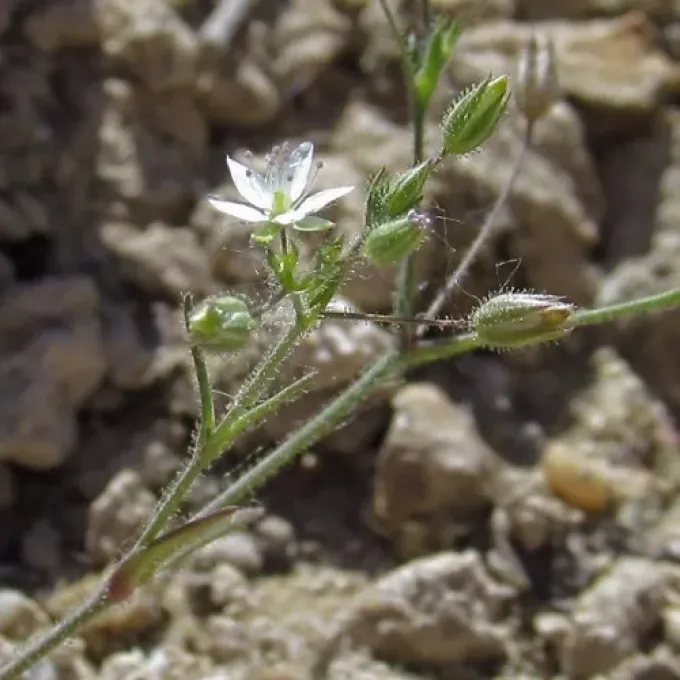
Description
Growing requirements
Minuartia bilykiana is a rare perennial herbaceous plant belonging to the Caryophyllaceae family. It is a highly specialized species with a strictly limited geographical distribution.
The plant is an obligate calciphile, thriving exclusively on chalky outcrops and limestone formations. These soil conditions are essential for its survival, as it cannot compete with more vigorous vegetation on richer soils.
Its climatic requirements are defined by the steppe and forest-steppe zones, which are characterized by high temperatures and moisture deficits during the summer months.
The botanical structure of the plant, including its cushion-forming growth habit, reflects its adaptation to arid rocky environments and intense solar radiation.
Because of its extreme habitat specificity and rarity, this plant has no agricultural utility and is primarily of interest for botanical conservation and ecological research.
Main diseases and pests
The primary threat to the stability of Minuartia bilykiana populations is the destruction of its natural habitat, particularly through quarrying and limestone extraction activities.
Anthropogenic pressure, such as excessive livestock grazing, causes soil compaction and erosion on the rocky slopes, directly endangering the fragile root systems of the plants.
Succession by competitive invasive species poses a significant risk to its existence, especially in areas where natural vegetation cover has been disturbed by human activity.
Due to its status as a non-agricultural, wild plant species, there is little data on specific pests or pathogens, though they face risks from generalist herbivores in the wild.
Habitat fragmentation remains the most critical issue, isolating small populations and reducing genetic diversity, which makes the species highly vulnerable to environmental change.