
Minuartia adenotricha
Minuartia adenotricha
Description
Growing requirements
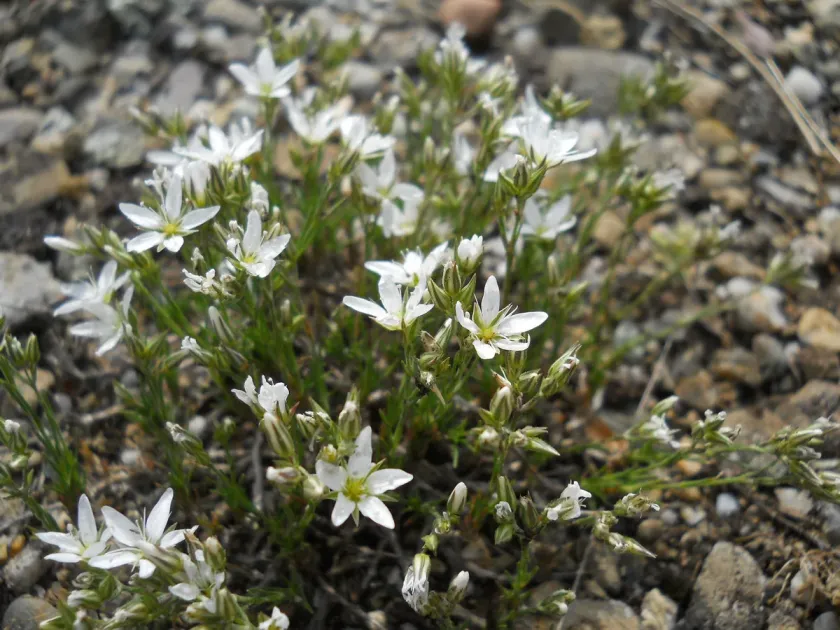
Minuartia adenotricha is a perennial herbaceous plant that belongs to the Caryophyllaceae family. This species is specifically adapted to high-altitude environments, which dictates its unique physiological structure and growth habit.
The plant originates from the mountainous regions of the Caucasus. In its native habitat, it thrives in rocky terrain and narrow crevices, areas characterized by intense sunlight and limited soil availability, demonstrating its resilience.
Botanically, it is distinguished by glandular hairs covering its stems and leaves, an adaptation that helps the plant manage transpiration and protect itself from extreme environmental stress. The plants form dense, cushion-like mats that efficiently trap moisture.
Regarding cultivation, the species requires extremely well-draining soil, typically a mix of gravel and sand. It does not tolerate heavy or waterlogged soil, as this causes rapid root decay and is the most common cause of failure in gardens.
The primary use for Minuartia adenotricha is in ornamental horticulture. It is highly valued for rock gardens, crevice plantings, and alpine troughs due to its compact nature, low maintenance, and ability to thrive in poor, stony conditions.
Main diseases and pests
The main threat to this plant is fungal root rot, which occurs when the soil remains too damp for extended periods. Ensuring superior drainage and proper air circulation is essential for maintaining the health of the plants throughout the year.
Slugs and snails are the most common pests that can cause damage to the foliage during the growing season. Additionally, keeping the crown of the plant dry is critical to prevent rot, particularly during wet, humid summers.