
Spring sandwort
Minuartia verna
Description
Sowing dates
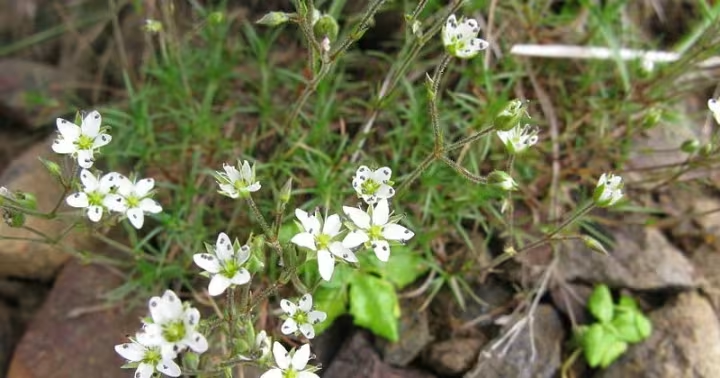
Minuartia verna, commonly known as spring sandwort, is a member of the Caryophyllaceae family, appreciated for its moss-like appearance in rock garden settings.
Propagation is typically carried out via seeds which require a period of cold stratification to break dormancy and ensure uniform germination in spring.
The seeds should be sown shallowly on the surface of a well-drained, sandy compost mix, as light is necessary for successful germination process.
In a controlled nursery environment, maintaining a temperature range of 18–20 degrees Celsius allows the seedlings to establish a sturdy root system before transplanting.
Vegetative propagation by dividing established clumps is also a common and efficient method to multiply the stock for larger landscape projects.
Growing requirements
The plant thrives in rocky, well-drained soils and shows a clear preference for sunny locations, which mimics its natural habitat on limestone outcroppings.
Soil structure should be sandy or gritty, ensuring that water drains away quickly from the crown of the plant to prevent seasonal rotting.
Minuartia verna is remarkably hardy and tolerant of poor, nutrient-deficient soils, making it an excellent candidate for alpine gardens and wall crevices.
Routine maintenance includes minimal watering once established, as the plant is drought-tolerant and sensitive to excessive moisture during hot summer months.
Providing sufficient space for air circulation is vital for keeping the cushion-like foliage healthy and free from potential fungal issues.
Main diseases and pests
Root rot is the primary threat to spring sandwort, usually triggered by waterlogged conditions or heavy soil types that do not permit adequate aeration.
Slugs and snails can cause mechanical damage to the fine foliage, especially during damp spring weather when the plant is pushing out new growth.
Fungal pathogens can occasionally attack the dense mats, particularly if the plants are situated in areas with poor airflow and high ambient humidity.
Preventive measures include careful irrigation practices, targeting the soil rather than the foliage, and ensuring the planting site is perfectly leveled for drainage.
Regular inspection of the plant bed allows for early detection of potential infestations, allowing gardeners to intervene with targeted treatments if necessary.