
Minuartia tenuissima
Minuartia tenuissima
Description
Growing requirements
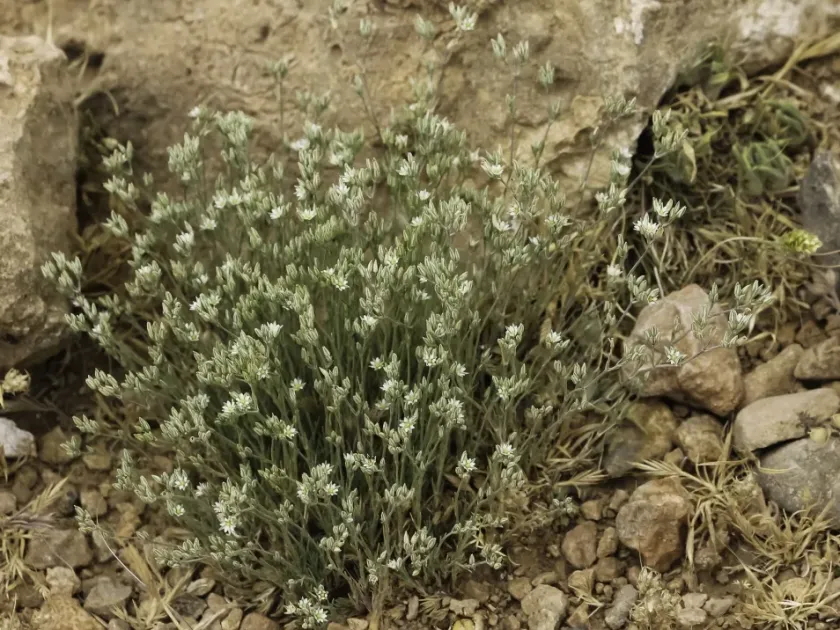
Minuartia tenuissima is a perennial herbaceous plant belonging to the Caryophyllaceae family. This miniature species naturally thrives in rocky environments, crevices of cliffs, and dry sandy areas, reflecting its adaptation to challenging landscapes.
The plant exhibits unique botanical features: it forms dense, compact mounds composed of delicate stems and fine, awl-shaped leaves. Its root system is shallow but highly efficient at retaining moisture in the harsh conditions of high-altitude habitats.
This crop is strictly demanding regarding soil drainage. In agrotechnical practice, it is crucial to avoid moisture stagnation around the root collar, as this leads to rapid decay. Soils should be poor in nutrients, loose, and ideally contain a significant amount of gravel or grit.
Successful cultivation requires an open, sunny location. The plant is highly sensitive to shading, which causes stems to lose their compactness, stretch out, and lose aesthetic appeal, while also increasing the vulnerability to fungal infections.
Climatic requirements include a high need for fresh air and excellent circulation. The species possesses high frost resistance, typical of plants adapted to the severe conditions of alpine zones where snow cover acts as a natural protective insulation.
Main diseases and pests
The primary threats to Minuartia are fungal diseases that develop in high humidity. Root rot is the most common cause of plant failure, especially during prolonged periods of heavy rain or early spring thaw when drainage might be compromised.
Pests rarely cause critical damage to this plant, though dense plantings may become susceptible to aphids or spider mites. These pests can weaken the plant's overall vigor, making it prone to secondary pathogens.
Prevention of diseases is based on strict water management. It is recommended to apply a top dressing of fine gravel or coarse sand around the rosettes to prevent direct contact between the plant's vegetative parts and moist soil surfaces.
Regular removal of dead stems from the center of the mound is necessary. Timely sanitary maintenance promotes better air circulation and reduces the risk of mold formation within the tight growth structure.
If early signs of rot appear, it is essential to restrict watering immediately and apply systemic fungicides. Avoiding high-nitrogen fertilizers is crucial, as they promote lush, weak growth that reduces the plant's natural resistance to environmental stress.