
Minuartia taurica
Minuartia taurica
Description
Growing requirements
Minuartia taurica is a perennial herbaceous plant belonging to the Caryophyllaceae family. In the wild, this endemic species is found primarily on rocky slopes and in the highlands of the Crimean Peninsula.
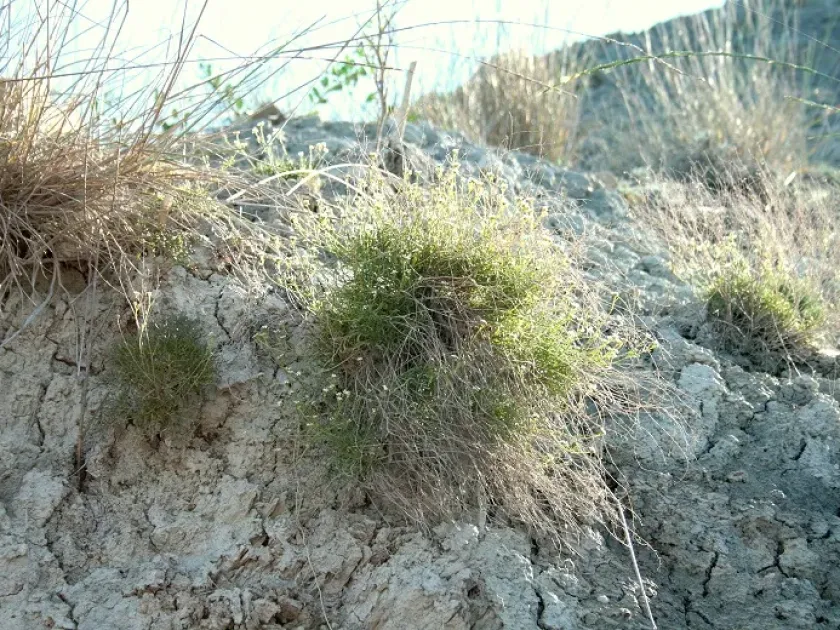
The plant features a compact cushion-like growth habit with narrow, linear leaves forming dense rosettes. Its root system is uniquely adapted to thrive within the crevices of limestone rocks.
Successful cultivation of this crop requires well-drained, nutrient-poor soils consisting mainly of gravel or grit. The plant is extremely sensitive to waterlogging, as stagnant water in the root zone can lead to rapid decay.
The crop prefers open, sunny locations with excellent airflow, as shade tends to make the stems weak and leggy. Agronomically, it is essential to mimic mountain slope conditions: a dry climate and lack of competition from weeds.
In terms of horticultural use, Minuartia taurica is valued strictly as an ornamental crop for rock gardens and screes. Landscape designers prize it for its early blooming and ability to maintain a tidy appearance throughout the growing season.
Main diseases and pests
The primary threats to this crop include root and crown rots, which occur when drainage is compromised or if over-watering happens during hot weather.
In greenhouse conditions or environments with high humidity, the plant may be affected by powdery mildew, requiring the use of sulfur-based fungicides.
Common pests include spider mites and aphids, which establish themselves within the dense leaf cushions, feeding on plant sap and weakening the overall health.
To prevent pest infestation, regular inspection of the plantings and ensuring proper air circulation around the plants is highly recommended.
Weeds pose a major threat as they compete for space and nutrients, often becoming a vector for fungal infections by trapping excess moisture near the crown.