
Minuartia stellata
Minuartia stellata
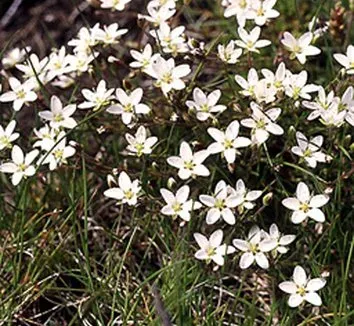
Description
Sowing dates
Minuartia stellata requires specific environmental triggers to initiate germination, primarily due to its adaptation to alpine ecosystems.
Seeds should undergo cold stratification for at least 6 to 8 weeks to break dormancy, ensuring a uniform emergence of seedlings in the spring.
Sowing should be performed on the surface of the growing medium, as the seeds are photoblastic and require sunlight to trigger the metabolic processes for germination.
In temperate climates, indoor sowing is usually started in late winter using a light, sandy substrate to prevent damping-off disease.
When sowing directly into the garden, late autumn planting is preferred, allowing the cold winter temperatures to perform the necessary stratification cycle naturally.
Growing requirements
Minuartia stellata belongs to the Caryophyllaceae family and is recognized for its dense, cushion-forming growth habit, typical of high-altitude vegetation.
The plant thrives in well-draining, nutrient-poor, stony soils; it is exceptionally well-suited for rock gardens and crevices where water runoff is rapid.
Full sun exposure is critical for the development of tight cushions; otherwise, the plant tends to lose its compact structure and may suffer from elongated growth.
Watering requirements are relatively low, as the plant is drought-tolerant once established and highly susceptible to root rot if kept in consistently damp conditions.
It displays high cold hardiness, successfully overwintering in harsh alpine regions provided that drainage remains unobstructed during spring thaw.
Main diseases and pests
The primary threats to Minuartia stellata are fungal infections, particularly Rhizoctonia and various wilts, induced by excessive soil moisture.
Overhead irrigation or high humidity levels during the summer can lead to foliage rot, making subsurface or perimeter watering the preferred method.
Pests are generally minimal, but in glasshouse conditions or extremely dry weather, spider mites can damage the delicate foliage, necessitating targeted treatments.
Cultural control, such as providing excellent air circulation and preventing overcrowding, is the most effective strategy for managing plant health.
If chemical intervention is necessary, systemic fungicides or mild acaricides applied at the first sign of distress are usually effective in protecting the population.