
Minuartia sedoides
Minuartia sedoides
Description
Growing requirements
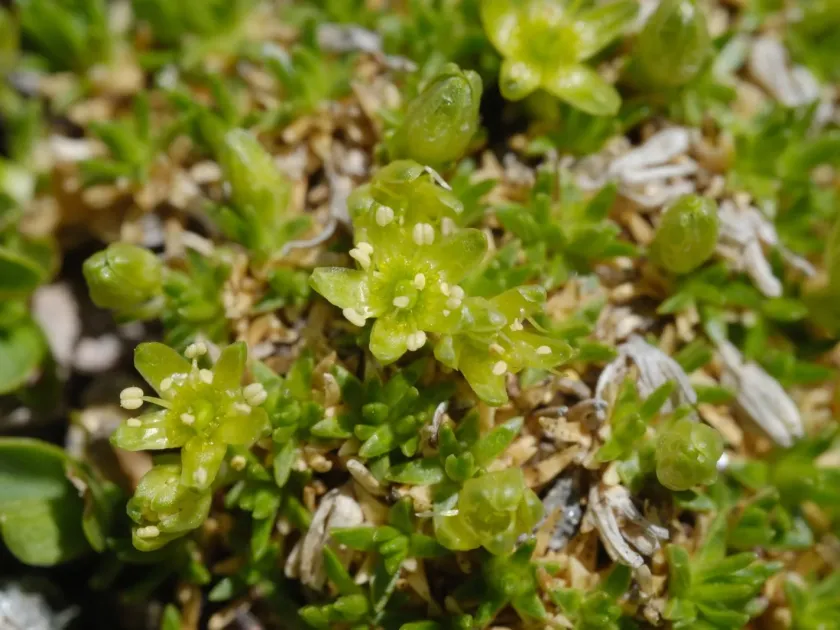
Minuartia sedoides is a compact perennial herb belonging to the Caryophyllaceae family. It is widely recognized for its characteristic cushion-like growth habit, which allows the plant to survive in harsh, windswept high-altitude environments across European mountain ranges.
The botanical structure of the plant features small, crowded linear leaves that closely resemble those of the Sedum genus. This morphological adaptation helps minimize water loss and provides protection against the mechanical impact of high-velocity mountain winds and snow accumulation.
Successful cultivation requires environmental conditions that mimic alpine habitats. The primary necessity is an exceptionally well-drained substrate consisting of a mixture of gravel, grit, and low-fertility mineral soil. Stagnant water is detrimental to the health of the root collar.
Minuartia sedoides thrives in cool climates with consistent air humidity. While it requires full sun to maintain its dense, compact shape, it must be protected from extreme heat, which can lead to rapid physiological decline and loss of vigor.
- Substrate: Gritty, well-draining, neutral to slightly acidic.
- Watering: Regular, but light, focusing on the root zone.
- Hardiness: Fully hardy in alpine regions with reliable snow cover.
Main diseases and pests
Fungal pathogens represent the most significant threat to the health of Minuartia sedoides. Root rot and damping-off disease are common when the plant is grown in overly moist conditions or in stagnant air, leading to a breakdown of the dense cushion structure.
Pest pressure is relatively low but can include spider mites during periods of prolonged drought or in greenhouse settings. These pests cause chlorosis and can eventually kill the plant if not managed with appropriate miticides or cultural modifications.
Winter injury is another concern, particularly in regions where freeze-thaw cycles occur without adequate snow insulation. This damage leaves the plant susceptible to secondary infections during the spring growing season.
To mitigate these risks, it is essential to ensure proper ventilation and avoid crowding. Applying a top dressing of fine gravel around the plant prevents the foliage from staying in direct contact with damp soil, significantly reducing the risk of decay.
Chemical control measures should be applied with extreme caution. Due to the plant's alpine nature, it is highly sensitive to excessive mineral salts and concentrated pesticides, which can easily induce chemical burns on the delicate vegetative parts.