
Minuartia saxifraga
Minuartia saxifraga
Description
Growing requirements
Minuartia saxifraga is a perennial herbaceous plant belonging to the Caryophyllaceae family. Known for its resilience in extreme environments, it is a specialized species that thrives in nutrient-poor, stony substrates, often found in high-altitude mountain regions of Europe.
The origin of this species is tied to calcareous rocky outcrops and scree slopes. Its native range is characterized by harsh climatic conditions, including high solar exposure and dramatic temperature fluctuations, which have shaped its unique physiological adaptations for survival.
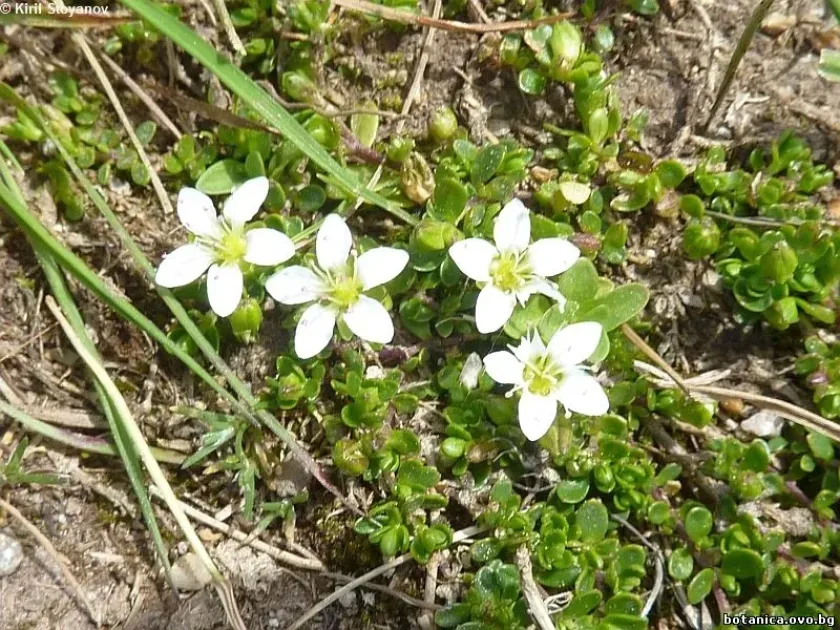
Botanically, it is recognized for its cushion-forming habit, featuring dense rosettes of narrow, linear leaves. The root system is surprisingly robust, allowing the plant to anchor itself firmly into narrow rock crevices and extract limited nutrients and water from deep within the substrate.
Regarding agrotechnical requirements, providing a highly permeable soil is the most critical factor. In cultivation, it requires a mix of grit, sand, and limestone chippings to ensure rapid drainage. Stagnant moisture is the primary cause of failure, as the plant's crown is highly susceptible to rot.
The agricultural and ornamental use of this plant is focused on xeriscaping and alpine garden design. It serves as an excellent ground cover for rockeries, where it provides a neat, evergreen appearance while requiring virtually no fertilization or pruning under appropriate conditions.
Main diseases and pests
The most common threat to Minuartia saxifraga is the development of fungal pathogens, particularly root rot, which typically stems from improper soil composition or over-irrigation. Proper site selection and drainage management are essential preventative measures against these infections.
While the plant is generally hardy, it can occasionally be affected by slugs or snails that feed on the foliage during rainy weather. Furthermore, competition from aggressive weeds can easily smother the plant, meaning that regular maintenance and weed removal are necessary to preserve the plant's health.