
Rock sandwort
Minuartia rupestris
Description
Growing requirements
The rock sandwort (Minuartia rupestris) belongs to the Caryophyllaceae family. It is a perennial herbaceous plant native to rocky crevices, screes, and alpine mountain ranges throughout Europe, adapted to harsh, stony habitats.
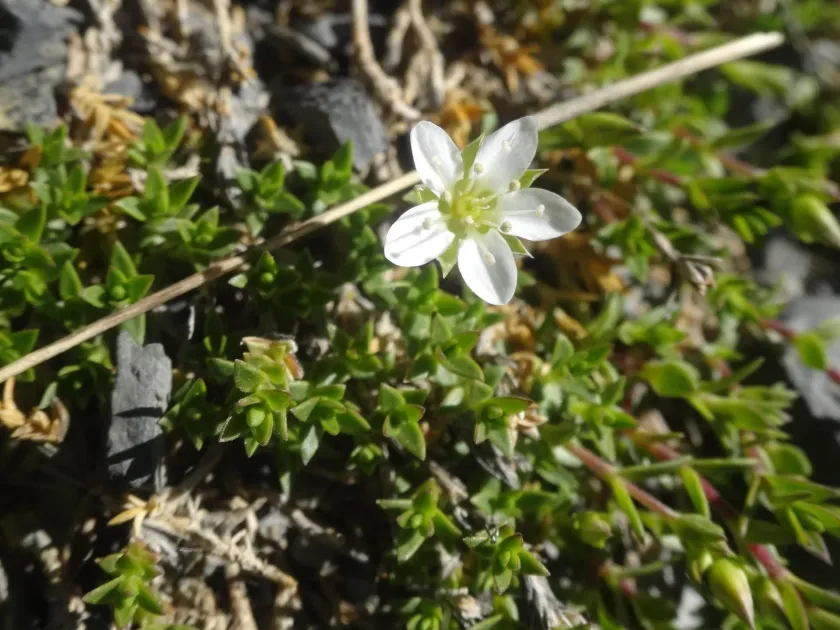
Botanically, it is characterized by forming dense, cushion-like mats. The leaves are narrow and sessile, providing a compact structure that remains green even in extreme environmental conditions, making it a favorite for rock gardens.
For successful cultivation, the plant requires well-drained, nutrient-poor soil. It thrives best in alkaline or neutral substrates that mimic its natural habitat, emphasizing the need for high mineral content and coarse sand or grit.
Regarding climate, this species is highly cold-hardy and prefers full sun exposure. It does not tolerate waterlogged soil, especially during winter months, as stagnant moisture can cause the crown of the plant to rot rapidly.
Maintenance techniques for this crop include sparse watering and avoidance of chemical fertilizers. Providing a stable, dry environment is more beneficial for the long-term health and growth of Minuartia rupestris.
Main diseases and pests
The primary threat to the rock sandwort is fungal infection, specifically root rot, which is triggered by excessive humidity. Proper airflow around the foliage and excellent drainage are the best preventative measures.
Pest issues include slugs and snails, which can target the succulent-like foliage during damp weather. Monitoring the plants in spring and using organic barriers can effectively prevent significant damage to the cushions.