
Reddish sandwort
Minuartia rubella
Description
Growing requirements
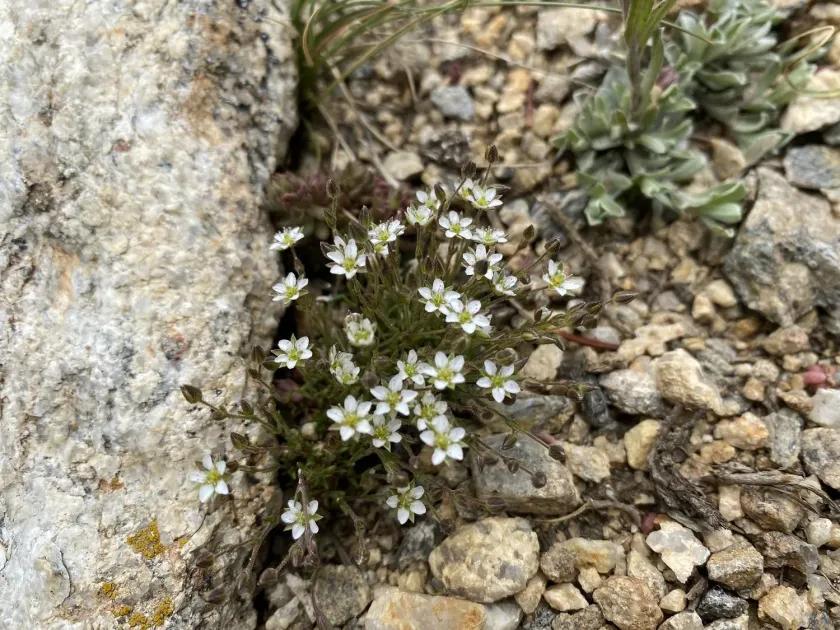
The reddish sandwort (Minuartia rubella) is a perennial herbaceous plant belonging to the Caryophyllaceae family. It is naturally distributed across Arctic and alpine regions, thriving in harsh environments where few other species can survive.
In terms of soil requirements, this plant prefers rocky, sandy, or gravelly substrates with excellent drainage. It is highly sensitive to waterlogging, making proper soil structure the primary factor for successful cultivation and plant longevity.
Light exposure is critical for the development of Minuartia rubella. It demands full sun and cannot compete with taller vegetation, which is why it is typically found in open, exposed rocky crevices or sparse tundra areas.
The plant is extremely hardy and well-adapted to the cold. It exhibits high resistance to freezing temperatures and strong winds, which are typical of its native high-altitude and circumpolar ranges.
Agrotechnical management is limited to site selection and maintenance. Because it is a slow-growing species, weed control is essential to ensure that the plant is not overwhelmed by more vigorous or invasive neighboring flora.
Main diseases and pests
Minuartia rubella is generally free from common agricultural pests and diseases due to its specialized habitat. Most pathogens that affect field crops are unable to tolerate the cold and arid conditions where this plant grows.
The greatest threat to this species is poor drainage. Excess moisture during the dormancy period often leads to root rot, which is the most frequent cause of mortality in both garden settings and controlled environments.
Pest pressure is minimal. The rigid, needle-like foliage provides a natural defense against common herbivores and insects, making it a very low-maintenance species in terms of pest management.
Proper air circulation is necessary to prevent any localized fungal growth, especially if the plants are kept in containers or under cover. Maintaining a dry crown area is essential for health.
Monitoring for invasive weeds is the primary protective measure needed. The plant's slow growth rate means it requires a clean, competition-free environment to establish its root system effectively.