
Ross's sandwort
Minuartia rossii
Description
Growing requirements
Ross's sandwort (Minuartia rossii) is a perennial herbaceous plant belonging to the Caryophyllaceae family. Its native range is primarily concentrated in the arctic and subarctic regions of North America, where it thrives in challenging, cold-climate environments.
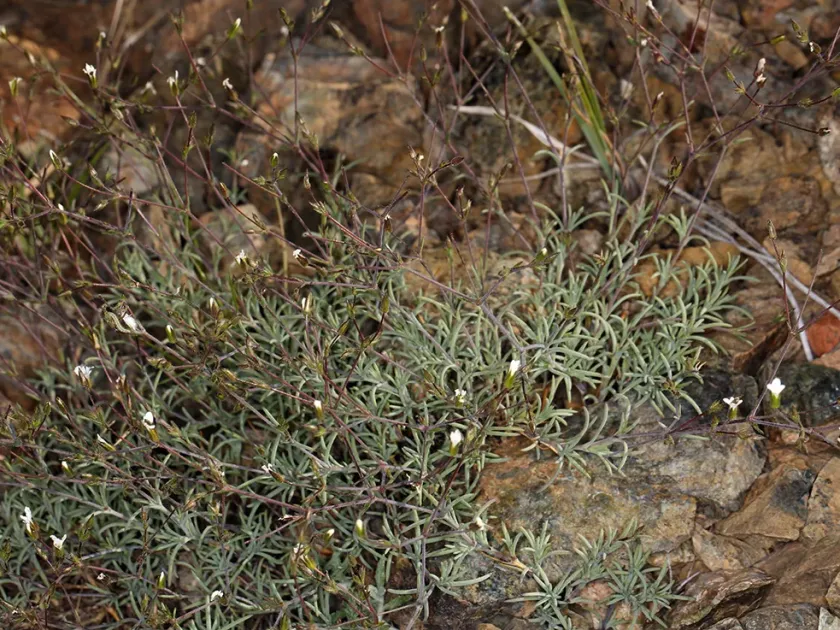
The botanical structure of the plant is highly specialized. It typically forms dense, cushion-like mats that minimize exposure to harsh arctic winds and help the plant maintain heat during the short growing season characteristic of northern latitudes.
Regarding soil requirements, this species demands well-drained, mineral-rich substrates. It is naturally adapted to rocky crevices, gravelly slopes, and scree, meaning it requires excellent drainage in cultivation to prevent the accumulation of moisture around its roots.
Climate preferences for Ross's sandwort are specific: it requires full sun exposure and cool temperatures. High humidity and high temperatures are generally detrimental to the plant's health, as they can lead to physiological stress and subsequent susceptibility to diseases.
In terms of usage, this plant is primarily utilized in alpine and rock gardening. It is a prized specimen for growers who focus on rare arctic flora, as its unique cushion form provides a distinct aesthetic for specialized garden structures like scree beds.
Main diseases and pests
The primary threat to Ross's sandwort in cultivation is root and crown rot, which typically develops due to poor soil drainage. Keeping the plant dry, especially in climates wetter than its natural arctic home, is crucial for its survival.
Pests such as spider mites may pose a risk when the plant is grown in confined conditions or in environments with low airflow. These pests thrive in dry conditions and can cause significant damage to the fine foliage of the plant.
Fungal pathogens causing leaf spot can become an issue if the cushion structure remains wet for extended periods. Providing adequate space between plants and ensuring good air circulation are essential preventive measures for the gardener.
Nematodes are a potential underground threat that can compromise the root system. Using sterilized, mineral-based potting media is a recommended practice to avoid introducing these pathogens into the growing area of the sandwort.
Weed infestation presents a major threat due to the slow-growing nature of this species. Ross's sandwort does not have the vigor to outcompete aggressive weeds, making consistent hand-weeding a necessary task for maintaining a healthy planting site.