
Minuartia recurva
Minuartia recurva
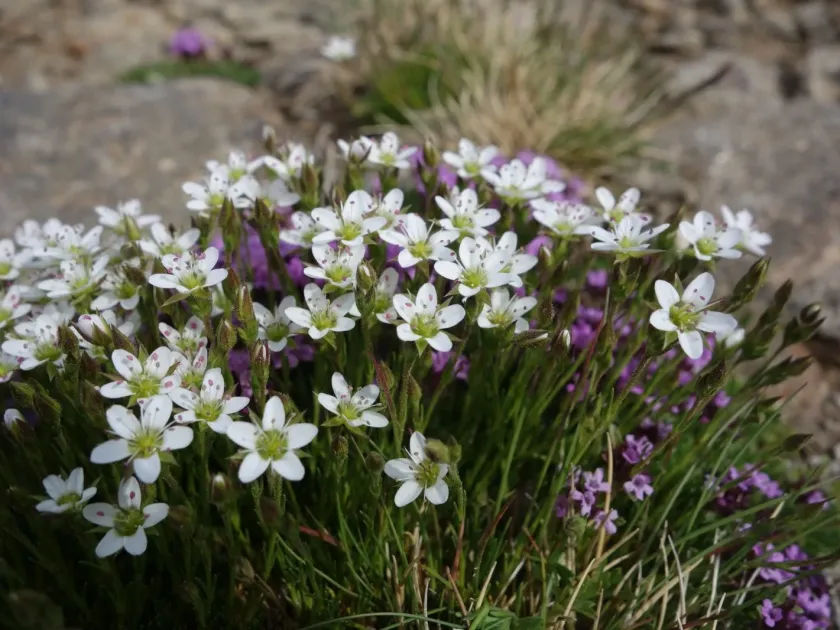
Description
Growing requirements
Minuartia recurva is a perennial herbaceous plant belonging to the Caryophyllaceae family. Its natural distribution is primarily centered in mountainous regions of Europe, where it thrives in rocky crevices and alpine meadows.
Successful cultivation of this species requires conditions that mimic its native high-altitude environment. It demands full sun exposure and a substrate with excellent drainage, as the plant cannot tolerate waterlogged soils or stagnant humidity.
The ideal soil profile consists of nutrient-poor, gritty, or rocky medium with a neutral to slightly alkaline pH. Excessive fertilization should be strictly avoided, as it promotes etiolated growth and weakens the plant's structural integrity.
The plant is highly resilient to temperature fluctuations and harsh winters, making it an excellent candidate for alpine gardens. It requires proper air circulation to ensure that the foliage remains dry and healthy, preventing various physiological issues.
In terms of practical use, Minuartia recurva is primarily valued in ornamental horticulture. It is frequently employed in rock gardens, scree beds, and as a ground cover in alpine-style landscaping, where it forms dense, decorative cushions.
Main diseases and pests
The primary threat to the health of the plant is root rot caused by poor soil drainage. Maintaining a consistent moisture level without saturation is crucial, often achieved by incorporating coarse sand or grit into the planting zone.
While pests are not a major concern, slugs and snails can occasionally cause localized damage to the foliage during humid weather conditions. Keeping the planting site clean of dense debris is the best preventative measure against these potential pests.