
Minuartia picta
Minuartia picta
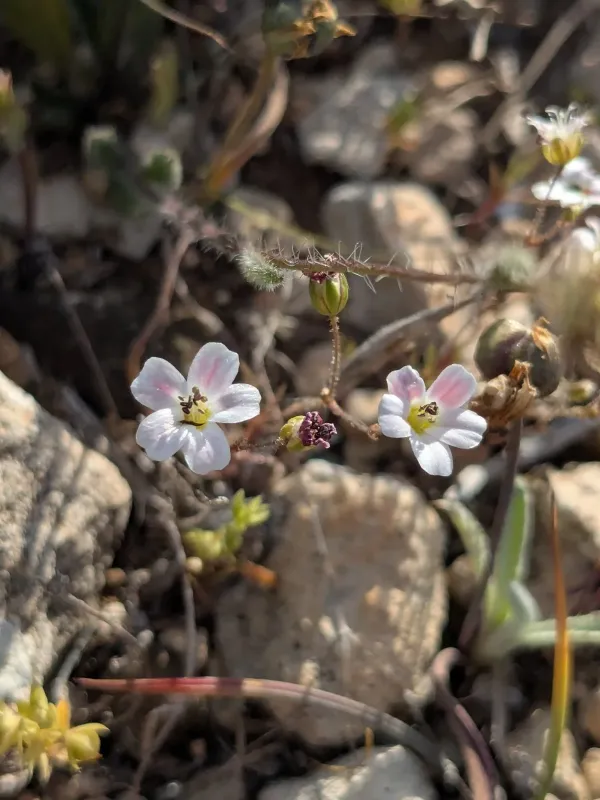
Description
Sowing dates
Minuartia picta, a member of the Caryophyllaceae family, requires specific conditions for optimal germination. Seeds should be sown in a well-draining, sandy substrate that mimics their natural rocky habitat, ensuring that they are not buried too deeply to allow light exposure.
The ideal sowing time in a managed agricultural environment is during early spring, when the soil temperature begins to rise. A gradual warming period helps in breaking seed dormancy, leading to a more uniform emergence of seedlings across the seedbed.
Maintaining constant but light moisture is critical during the initial germination phase. Over-watering at this stage is a common mistake that leads to damping-off disease, which is particularly devastating for small, delicate seedlings of this species.
When propagating in containers, ensure that the pots have ample drainage holes to prevent water accumulation. Using a sterile substrate is highly recommended to avoid the introduction of soil-borne pathogens that thrive in the same conditions as the young seedlings.
Proper density management is essential during the sowing phase. Oversized clusters of plants reduce airflow, increasing the risk of rot, so thinning may be necessary if the seeding rate was too high during the initial setup of the crop plot.
Growing requirements
Successful cultivation of Minuartia picta depends heavily on the soil structure. It thrives in stony, nutrient-poor, and highly permeable soils where water does not linger near the root zone. Heavy clay soils are generally unsuitable for this plant.
Light requirements for this species are high, as it is naturally adapted to open, sun-drenched environments. In a nursery setting, ensure that the plants receive full sun exposure for the majority of the day to maintain their compact and healthy growth habit.
While the plant is hardy in terms of temperature, it is sensitive to high humidity combined with stagnant air. Providing a location with good natural ventilation is essential for preventing fungal infections that often target the leaf surfaces and stems.
The preferred pH range for this species is neutral to slightly alkaline. Acidic peat-based substrates should be strictly avoided as they inhibit root development and may cause nutrient deficiencies by altering the uptake of essential minerals.
Watering should be approached with caution, favoring the "soak and dry" method. Utilizing drip irrigation systems helps keep the foliage dry, which is a key agronomic practice to reduce the incidence of moisture-related plant health issues.
Main diseases and pests
Root rot, primarily caused by excessive soil moisture and poor drainage, represents the most significant threat to Minuartia picta. Monitoring the soil moisture levels and adjusting irrigation schedules based on weather conditions is the primary preventive measure.
Pests such as aphids and spider mites can occasionally affect the plant during periods of high heat or stress. Early identification and the use of targeted biological controls or soaps can mitigate damage without harming the overall crop health.
Weed competition is a major obstacle, especially during the plant's establishment phase. Because Minuartia picta is slow-growing, mechanical weeding must be done carefully to avoid disturbing its shallow root system, which is easily damaged by standard tools.
Botrytis and other leaf spot fungi can become problematic in damp, closed environments. Improving airflow and removing debris from around the plant bases are effective cultural practices that significantly reduce the risk of infection.
In regions with harsh winters, frost heaving can displace the roots of young plants. Mulching with a layer of fine, clean gravel around the base of the plant provides both insulation and protection against soil erosion and mechanical damage.