
Minuartia mutabilis
Minuartia mutabilis
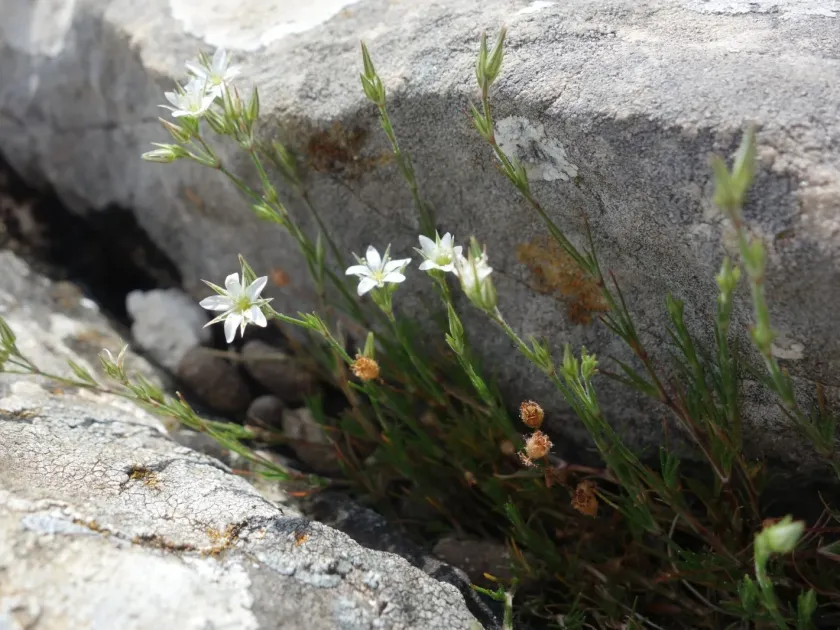
Description
Growing requirements
Minuartia mutabilis is a perennial herbaceous plant belonging to the Caryophyllaceae family. This species is native to mountainous regions and is highly valued for its ability to form dense, cushion-like mats in challenging environments.
Botanically, the plant features slender, grass-like foliage arranged in tight rosettes. The growth pattern is adapted to minimize evaporation and withstand strong winds, making it an ideal choice for rock gardens and alpine installations.
In terms of soil, this plant strictly requires excellent drainage. It thrives in gritty, sandy, or rocky substrates that mimic its native habitat. Rich or heavy soils are generally unsuitable and lead to root decay.
Sunlight requirements are high, as the species is essentially heliophilic. It should be planted in locations that receive full sun for most of the day to ensure optimal structural density and flowering performance.
Climatic adaptability includes a strong tolerance for cold temperatures, though the plant requires protection from winter wetness. Providing a layer of coarse grit around the crown helps prevent moisture from accumulating at the base of the plant.
Main diseases and pests
Root rot, driven by poor drainage, is the most common health issue for Minuartia mutabilis. Proper site selection and soil amendment with non-organic materials are the best preventative measures.
Aphids can occasionally colonize the young growth during spring. If infestations are observed, they can be managed using gentle insecticidal soaps or by encouraging local natural predators.
Fungal pathogens such as mildew can develop if the foliage remains constantly damp. Proper air circulation and avoiding overhead watering in the late afternoon are critical for plant hygiene.
Soil-dwelling larvae can sometimes feed on the root system, causing yellowing and stunted growth. Monitoring the soil for such pests is necessary in gardens with high organic insect activity.
Slugs and snails can consume the tender parts of the plants in early spring. Protecting the plants with barriers or organic bait is a common practice for gardeners in regions with high slug populations.