
Mountain sandwort
Minuartia montana
Description
Growing requirements
Mountain sandwort (Minuartia montana) is a perennial herbaceous plant belonging to the Caryophyllaceae family. Naturally occurring in rocky and sandy habitats across Southern Europe, this species is highly adapted to challenging, nutrient-poor environments with excellent drainage.
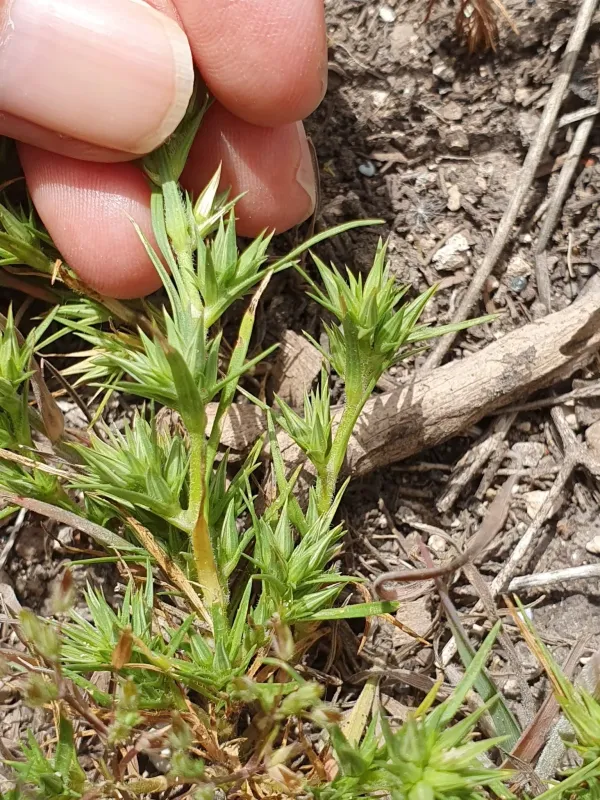
In landscaping, this plant is primarily utilized for its compact growth habit. It forms dense, mat-like cushions that are aesthetically pleasing in rock gardens and crevices. Its resilience and ability to thrive where others struggle make it a staple for alpine gardening enthusiasts.
Sunlight requirements for Minuartia montana are strict. The plant requires full exposure to sunlight to maintain its structural integrity and prevent leggy, weak growth. Shaded environments will quickly lead to the thinning of the foliage and eventual loss of the mat.
Regarding soil, the primary requirement is a porous, well-drained medium. Sandy or gritty soils are ideal, as they prevent water retention. High-nutrient or heavy clay soils should be avoided, as they promote rot and inhibit the plant's natural growth pattern.
The plant demonstrates good drought tolerance once established. Watering should be sparse and conducted only during extended dry spells. Proper irrigation management is vital to ensure the soil surface dries out quickly between waterings.
Main diseases and pests
The most significant threat to mountain sandwort is fungal infection, usually triggered by excessive moisture. Root rot is a common issue when the plant is grown in soil that holds too much water or lacks adequate drainage layers.
Insect pests are generally not a major concern, though spider mites may appear during periods of extreme heat and dryness. Observing the foliage for signs of stippling or webbing is recommended as a part of regular maintenance.
Preventative measures involve keeping the area free of weeds, which could otherwise trap humidity and promote pathogens. Ensuring airflow around the base of the plant is critical to minimizing the risk of fungal outbreaks.
In regions with heavy snowfall and subsequent spring thaw, care must be taken to prevent standing water around the plants. If rot is detected, affected portions should be removed immediately to protect the health of the remaining colony.
Finally, avoid over-fertilization, as high levels of nitrogen encourage soft, rapid growth that is more susceptible to disease. Keeping the soil profile lean mimics the natural habitat and promotes long-term plant health.