
Minuartia meyeri
Minuartia meyeri
Description
Growing requirements
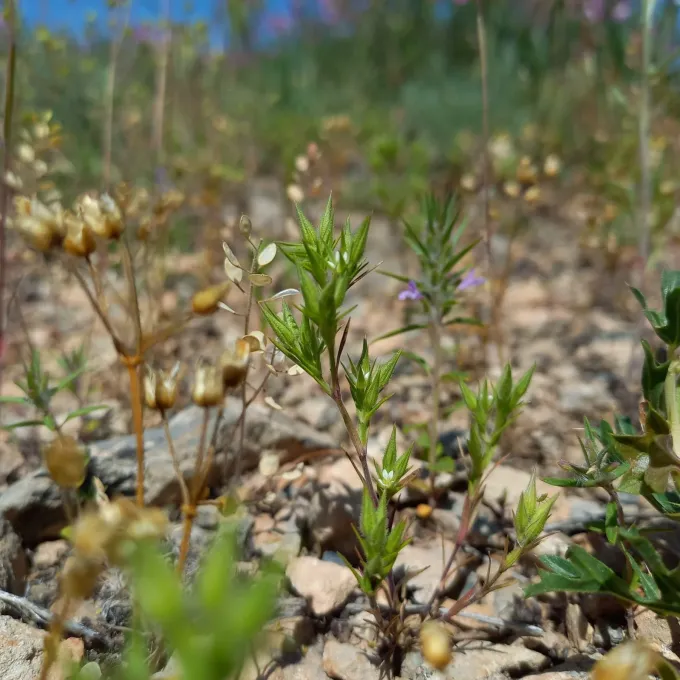
Minuartia meyeri is a perennial herbaceous plant belonging to the Caryophyllaceae family. It is native to various regions characterized by temperate and steppe climates, often colonizing rocky terrains, hillsides, and sandy soils. The plant is botanically recognized for its dense, cushion-like growth habit, which allows it to thrive in exposed and windy environments.
The morphology of the plant includes narrow, linear or subulate leaves organized in basal rosettes. Its stems are thin, erect or ascending, typically crowned with small, white flowers. This structural design helps the plant survive in nutrient-poor environments by optimizing energy conservation and moisture management within the foliage.
Successful cultivation of Minuartia meyeri requires well-drained, porous soil with a neutral to slightly alkaline pH. The plant is highly sensitive to waterlogged conditions, making the installation of a gravel or sand drainage layer essential for commercial or decorative planting. It thrives in full sunlight and performs poorly under shade or competition from faster-growing vegetation.
Standard horticultural practices for this species focus on maintaining low competition from invasive weeds. During the establishment phase, supplemental irrigation is necessary; however, once established, the plant exhibits remarkable drought tolerance. It is fully hardy and requires no specialized winter protection in typical temperate climatic zones.
Economically, Minuartia meyeri is primarily valued in the landscaping and horticultural industry. Its ability to create dense, low-growing mats makes it ideal for rock gardens, crevice planting, and erosion control on steep or stony banks. It is considered a low-maintenance species suitable for sustainable landscaping projects.
Main diseases and pests
The primary threats to Minuartia meyeri include fungal pathogens, particularly root rot, which typically manifest in environments with poor soil drainage. Ensuring that the substrate remains aerated is the most effective preventative measure against these diseases. Overcrowding of plants should also be avoided to ensure adequate air circulation.
In terms of pests, the plant may occasionally be affected by mites or small sap-sucking insects during unusually hot and dry summers. These infestations are generally localized and can be managed through mechanical removal or the application of mild systemic insecticides if the damage threatens the aesthetic integrity of the planting.