
Minuartia mesogitana
Minuartia mesogitana
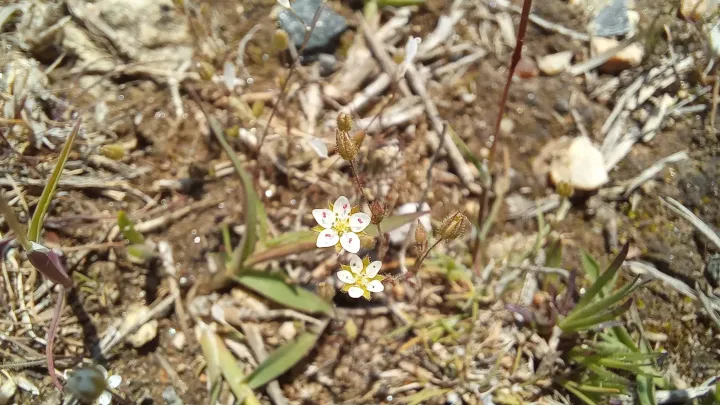
Description
Sowing dates
Minuartia mesogitana is a herbaceous perennial belonging to the Caryophyllaceae family. While not an industrial crop, it is highly valued by horticulturalists for its ornamental use in rock gardens and alpine-style landscaping projects.
Propagation is typically achieved through seeds, which are sown in late winter or early spring inside a greenhouse. The medium used should be a light, well-draining mix, ideally incorporating a high percentage of sand or grit.
The seeds are small and require light for germination; therefore, they should be surface-sown and pressed gently into the substrate without covering them with soil. This ensures optimal access to light for the emerging seedlings.
Temperature control is essential during the germination phase, with an ideal range of 15–20 degrees Celsius. Maintaining a consistent but light moisture level is key to avoiding fungal issues in the seed trays.
Seedlings are transplanted into individual containers once they have developed their first true leaves. This promotes the growth of a robust root system before they are moved to their permanent outdoor location.
Growing requirements
Originating from Mediterranean and Near Eastern mountainous regions, Minuartia mesogitana thrives in full sun. It requires a location that provides consistent solar exposure throughout the day.
The soil must be poor, gritty, and lean, mimicking the rocky outcrops of its natural habitat. Heavy or fertile soils often cause the plant to lose its compact, mat-forming growth habit.
Watering requirements are remarkably low once the plant is established. It exhibits significant drought tolerance, making it an excellent candidate for xeriscaping or low-maintenance garden designs.
Adequate air circulation is necessary to prevent the development of localized moisture pockets, which can damage the plant's dense foliage. Proper spacing during planting facilitates this airflow.
While hardy, the plant benefits from protection during severe winters. In areas with little snowfall and extreme frost, a light layer of horticultural grit or fleece can help prevent desiccation of the plant tissues.
Main diseases and pests
The most significant threat to Minuartia mesogitana is poor drainage. Excessive water retention in the soil frequently leads to root rot, which can quickly devastate a colony.
Pests such as aphids and spider mites may target the plant during periods of high heat and low humidity. Early detection and the application of appropriate biological controls are recommended.
Fungal diseases like powdery mildew or various wilt pathogens can occur if environmental conditions are too humid. Maintaining dry, airy conditions is the primary preventive measure.
Slugs and snails can cause cosmetic and structural damage, especially to young plants in the spring. Barrier methods, such as mulching with sharp gravel, are highly effective against these pests.
Over-fertilization represents a major cultural mistake that can weaken the plant, making it more susceptible to pathogens. The species is adapted to nutrient-poor environments and does not require conventional fertilization.