
Minuartia laricifolia
Minuartia laricifolia
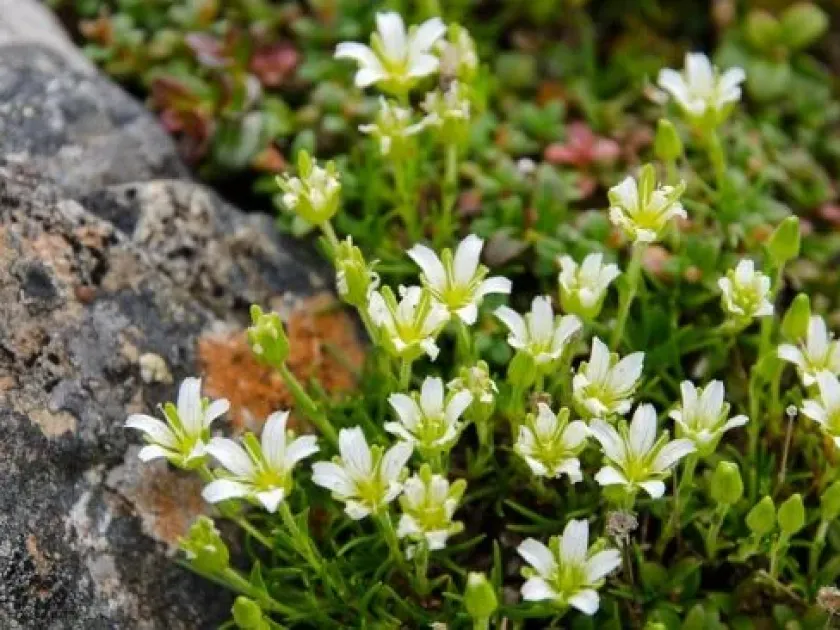
Description
Sowing dates
Sowing Minuartia laricifolia seeds is best performed in early spring, starting from April. In temperate climates, sowing directly into the open ground during late autumn is also effective, as the natural stratification promotes better germination.
For container-grown starts, sow the seeds in February or March using a light, well-draining substrate. Keep the seeds on the surface, covering them only lightly with fine sand, as light is essential for them to sprout successfully.
Maintain a temperature range of 18–20 degrees Celsius for the best germination results. Seedlings typically emerge within two to three weeks; once they appear, ensure they receive bright, indirect light to prevent legginess.
When transplanting into the landscape, space the plants about 15–20 centimeters apart. As this species establishes itself slowly, planting at a tighter spacing helps create a full, lush carpet effect much sooner.
Propagation can also be achieved through division in early autumn or by taking stem cuttings during the summer months. These vegetative methods ensure that the offspring are identical to the parent plant.
Growing requirements
Minuartia laricifolia, a member of the Caryophyllaceae family, is native to high-altitude mountain regions. It thrives in gritty, well-drained soils and performs best in environments with a neutral to slightly alkaline pH.
This plant is highly photophilous and requires full sun exposure to maintain its compact, cushion-like habit. In shady conditions, the stems tend to stretch, which diminishes both its structural appeal and flowering density.
While the plant is remarkably cold-hardy, it is sensitive to excessive winter moisture. Excellent drainage is non-negotiable, as standing water around the root zone will quickly lead to decay during dormant months.
Drought-tolerant once established, this species requires minimal irrigation. Water sparingly, and only during prolonged dry spells, taking care to keep the moisture away from the crown of the plant to prevent rot.
Avoid heavy fertilization, as the species is adapted to nutrient-poor soils. Excessive nitrogen will cause rapid, weak growth that makes the plant susceptible to environmental stress and loses its characteristic texture.
Main diseases and pests
The most significant threat to Minuartia laricifolia is waterlogged soil, which leads to root and crown rot. Proper site selection with gravel-based drainage is the primary defense against these issues.
High humidity combined with poor airflow can encourage powdery mildew. If detected, remove the affected areas and improve circulation, or use a suitable fungicide if the infection becomes widespread.
Pests are generally not a concern for this rock garden plant. However, in hot and dry climates, spider mites may occasionally infest the foliage, appearing as fine webs between the stems.
Slugs and snails can cause damage to new growth during the spring. Implementing simple barriers like coarse gravel or crushed eggshells around the plant base can help deter these mollusks effectively.
Always clear away debris and fallen leaves from the center of the plant. A clean environment prevents the accumulation of moisture and fungal spores, which are the main culprits in plant decline.
Harvesting
Minuartia laricifolia is primarily utilized for ornamental purposes in landscaping. It is highly valued for its ability to form dense, evergreen mats, making it an excellent choice for rock gardens and crevices.
Seed collection should be done in late summer after the capsules have fully ripened and turned brown. Store the collected seeds in a cool, dry place inside paper envelopes until the next planting season.
After the main flowering period ends, trim back the old flower stalks. This light pruning helps the plant maintain its tight, cushion-like shape and encourages the development of healthy green foliage.
When dividing established clumps, perform the work in the late summer, ensuring the divisions are watered until they are well-established. These sections can be replanted immediately into prepared spots.
Given its rugged nature, this perennial is a long-lasting addition to any alpine-style garden, providing a reliable and visually appealing ground cover that requires very little maintenance once settled.