
Fine-leaved sandwort
Minuartia hybrida
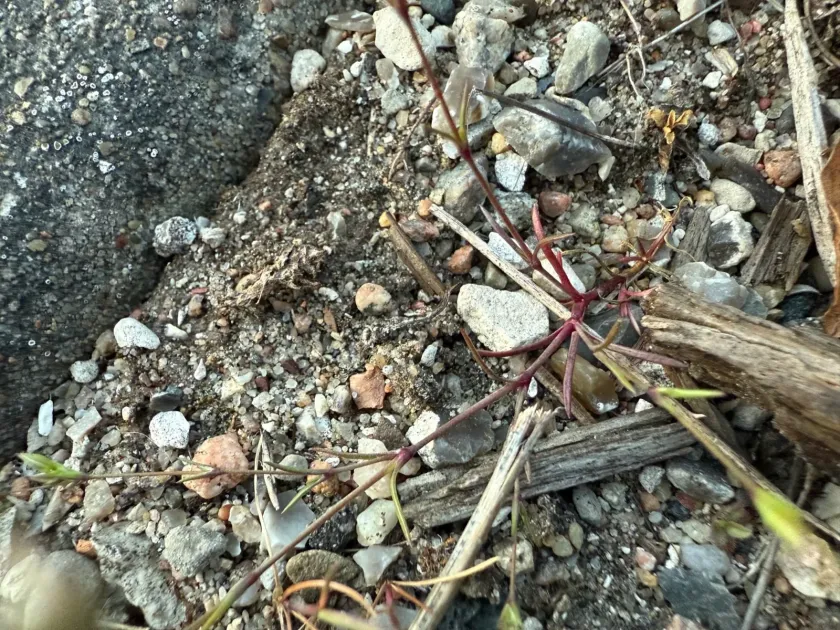
Description
Sowing dates
Fine-leaved sandwort (Minuartia hybrida) is primarily a wild-growing herbaceous plant, which is not currently utilized in large-scale commercial agricultural systems.
In natural habitats, the sowing process occurs through natural seed dispersal after the plant completes its life cycle in the late spring or early summer.
If propagation is required for ecological restoration or research, sowing should occur in autumn or very early spring to allow for natural environmental cues.
Seeds are extremely small and should be scattered on the surface of well-drained, sandy substrates without deep burial, ensuring they are exposed to light.
Maintaining a stable, low-density environment is critical for successful germination, as the species does not tolerate overcrowding or high competition.
Growing requirements
Minuartia hybrida belongs to the Caryophyllaceae family and is recognized for its ability to thrive in nutrient-poor and rocky environments.
The plant requires full sun exposure and performs best in well-drained, porous soils, typically avoiding areas with high clay content or water retention.
Originating from Europe and parts of Western Asia, it is well-adapted to Mediterranean and temperate climates where it occupies open, sun-drenched habitats.
Soil pH preference is generally neutral to slightly alkaline, which matches the geological conditions of the calcareous soils where it is often found.
As an ephemeral species, its agronomic requirements are limited to minimizing soil disturbance and preserving the natural drainage profile of the area.
Main diseases and pests
Due to its short life cycle, the plant typically escapes the major disease pressure faced by perennial or late-season agricultural crops.
High humidity and poor soil aeration are the primary environmental stressors that can lead to root rot and fungal colonization of the plant tissue.
Insect pests are generally not a significant threat; however, generalist herbivores may feed on the plant in environments where preferred food sources are scarce.
The most substantial threat is interspecific competition, where faster-growing, invasive weeds shade out the small-stature Minuartia during its active growth period.
Chemical weed control or excessive use of fertilizers in adjacent areas can severely disrupt the local population balance of this sensitive species.