
Hooked sandwort
Minuartia hamata
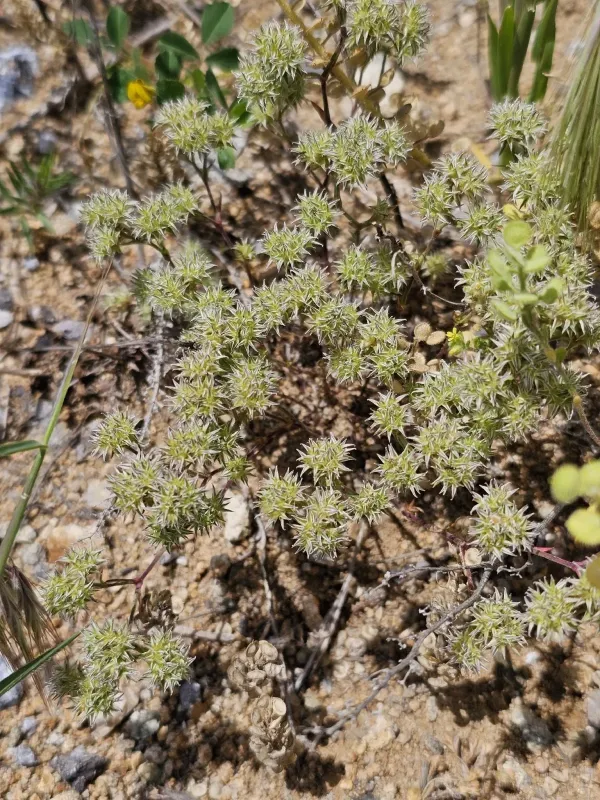
Description
Growing requirements
Hooked sandwort (Minuartia hamata) is a herbaceous annual plant belonging to the Caryophyllaceae family. It is naturally adapted to rocky and open habitats, where it thrives in conditions that are often unsuitable for conventional agricultural crops.
The species originates from Mediterranean-type climates, making it exceptionally resilient to heat and extended periods of drought. It is highly valued for its ability to colonize degraded soils with low nutrient content and limited water holding capacity.
Requirements for soil focus primarily on drainage. The plant is extremely sensitive to waterlogging, which promotes root rot and death. It performs best in sandy or gravelly substrates that allow for rapid drainage after rare rainfall events.
Regarding climate, Minuartia hamata requires full solar exposure to complete its life cycle effectively. It cannot tolerate shade, as even partial coverage leads to stunted growth and reduced seed production capacity.
Agronomic management involves minimal irrigation and fertilization. Excessive nitrogen application is discouraged as it weakens the plant's structural integrity and increases its susceptibility to physiological stress.
Main diseases and pests
The primary threats to the cultivation of this species are fungal pathogens that thrive in damp conditions. Root diseases such as Fusarium or Rhizoctonia are common when soil humidity is not properly managed through adequate aeration.
Insect pests include various aphids and soil-dwelling larvae. These organisms can severely damage the plant during its early developmental stages, leading to significant gaps in the field population and reduced overall biomass yield.
Weed pressure remains a significant challenge, as Minuartia hamata exhibits a relatively slow initial growth rate. Failure to control competing weeds during the seedling stage often results in the total loss of the crop.
Powdery mildew is another potential issue, especially during transitional seasons with fluctuating humidity levels. Regular inspection of foliage is necessary to detect early symptoms and prevent large-scale infection.
Integrated pest management strategies should emphasize preventive cultural practices, such as maintaining optimal plant spacing to ensure airflow and reducing humidity around the crown of the plant to prevent pathogen establishment.