
Greenland stitchwort
Minuartia groenlandica
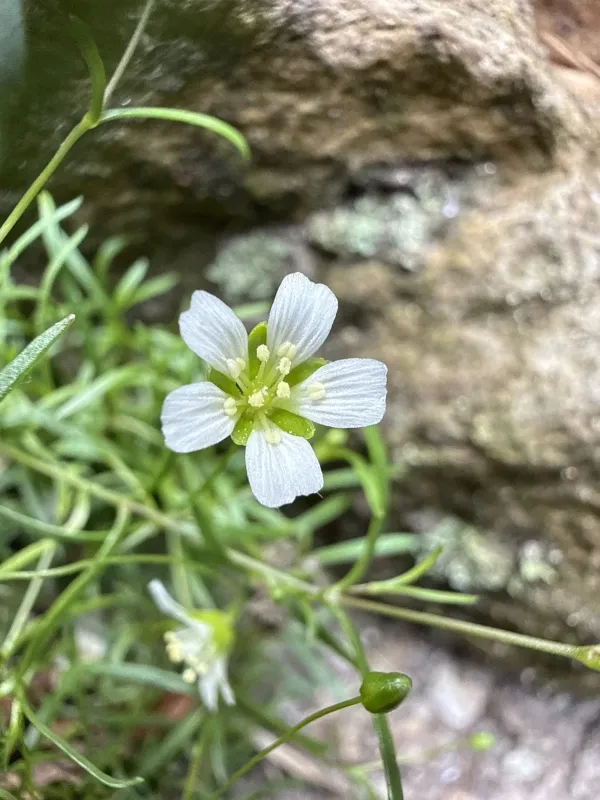
Description
Sowing dates
Greenland stitchwort, scientifically known as Minuartia groenlandica, belongs to the Caryophyllaceae family. This delicate perennial is well-suited for rock gardens and thrives in environments that mimic its natural subarctic and alpine habitats.
Propagation is typically achieved through seed sowing, which requires cold stratification for successful germination. Seeds should be sown in late autumn in a prepared cold frame or container, allowing them to experience natural winter temperatures to break dormancy.
When sowing in containers, use a well-draining, grit-heavy soil mix. Sprinkle the seeds onto the surface and press them lightly into the substrate, ensuring they remain exposed to light, as they require it for successful germination.
During the seedling stage, maintain consistent but light moisture. Avoid over-watering, which is a common cause of failure in young plants. Once the seedlings have developed their true leaves, they can be carefully moved to their permanent locations.
Planting out into the garden should be done after the danger of severe frost has passed. Space individual plants about 15–20 centimeters apart to allow them to form a cohesive, low-growing mat that suppresses weeds and provides excellent aesthetic coverage.
Growing requirements
This species demands excellent drainage and a sunny location to maintain its compact, dense growth habit. While it can handle light shade, full sun is generally preferred to prevent the foliage from becoming loose or leggy.
The soil should be sandy, gritty, or rocky, effectively mimicking the mountainous slopes where the species originates. Rich, fertile soils are unsuitable as they promote excessive growth at the expense of the plant's natural hardiness and longevity.
Greenland stitchwort is exceptionally cold-hardy, thriving in regions with harsh winters. It does not require special winter protection provided the planting site is well-drained and not prone to winter waterlogging, which is its primary enemy.
Neutral to slightly acidic soil pH levels are optimal. The plant does not require heavy fertilizing; indeed, added nutrients can lead to weakened stems and increased susceptibility to fungal issues, so it should be grown in poor, lean soil.
Maintenance is relatively minimal during the growing season. Periodic weeding and light watering during extended heatwaves are usually sufficient to keep the plants healthy and thriving in a well-prepared rock garden or scree bed.
Main diseases and pests
The most significant threat to Greenland stitchwort is fungal infection, particularly root rot, which is triggered by excessive moisture or poor air circulation. Proper placement and soil composition are the best defenses against these pathogens.
If fungal issues arise, it is essential to remove the affected plant material immediately to prevent the spread to adjacent specimens. Fungicides can be used sparingly if the issue is detected early, but improving drainage is the definitive solution.
Pests like spider mites may occasionally appear during hot, dry spells, causing the foliage to lose its vibrant color. Monitoring the plants during the mid-summer peak is advised to catch any infestations before they become widespread.
Slugs and snails may occasionally feed on the plant's soft foliage, especially in damp conditions. Using crushed stone or gravel as a mulch around the base of the plant can create an effective physical barrier that discourages these pests.
In conclusion, the plant's health relies on replicating its natural environmental stressors rather than trying to pamper it. When grown in appropriate rocky, well-draining sites, it shows high resistance to disease and pest pressure.