
Minuartia graminifolia
Minuartia graminifolia
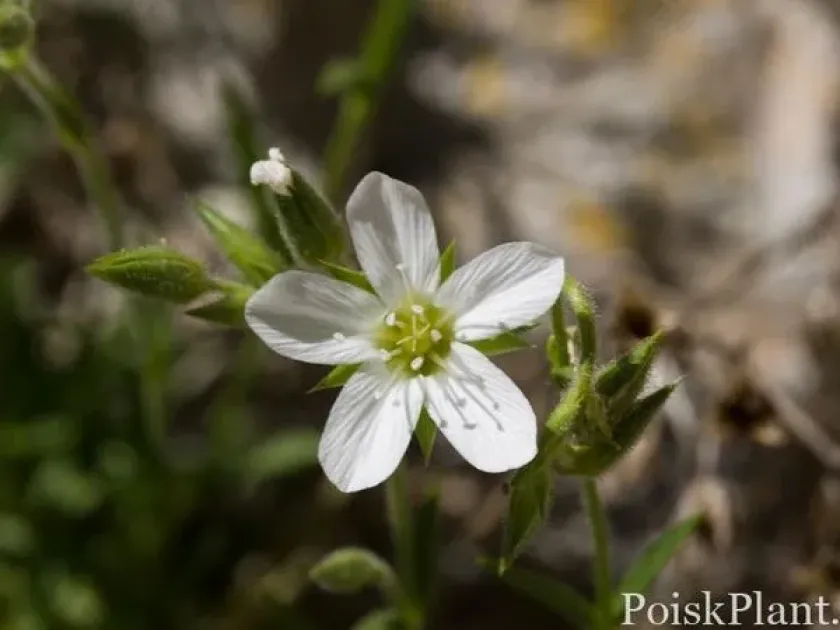
Description
Growing requirements
Minuartia graminifolia is a perennial herbaceous plant belonging to the Caryophyllaceae family. It is native to mountainous regions and rocky outcrops of Southern Europe, adapted to harsh environmental conditions.
The plant is known for its distinctive growth habit, forming dense, cushion-like mats. Its leaves are thin and linear, mimicking the appearance of fine grasses, which gives the species its common botanical name.
In terms of soil requirements, this crop thrives in well-drained, gritty, or sandy substrates. It is essential to provide an excellent drainage system as the plant is highly susceptible to root rot caused by stagnant water.
This species requires full sun exposure to maintain its compact growth form. It is highly drought-tolerant once established and performs best in open locations with good air circulation.
The cultivation practice involves minimal fertilization, as high nutrient levels can cause weak, leggy growth. Watering should be deep but infrequent, allowing the substrate to dry out between applications.
Main diseases and pests
The primary threats to Minuartia graminifolia are fungal diseases such as leaf spots and root rots, which are triggered by excess humidity and poor air circulation within the cushion.
Pests such as aphids or spider mites can occasionally affect the plant, particularly when grown under suboptimal conditions or in containers with restricted ventilation.
The most effective preventative measure is gravel mulching, which creates a dry barrier between the plant's sensitive neck and the wet soil, preventing rot development.
In case of pest outbreaks, applications of horticultural soap or systemic insecticides are recommended, ensuring the treatment reaches the dense inner parts of the mat.
Maintenance is key: regular inspection for dead tissue and debris removal helps minimize the risk of pathogen build-up and promotes vigorous regrowth each season.