
Minuartia glaucina
Minuartia glaucina
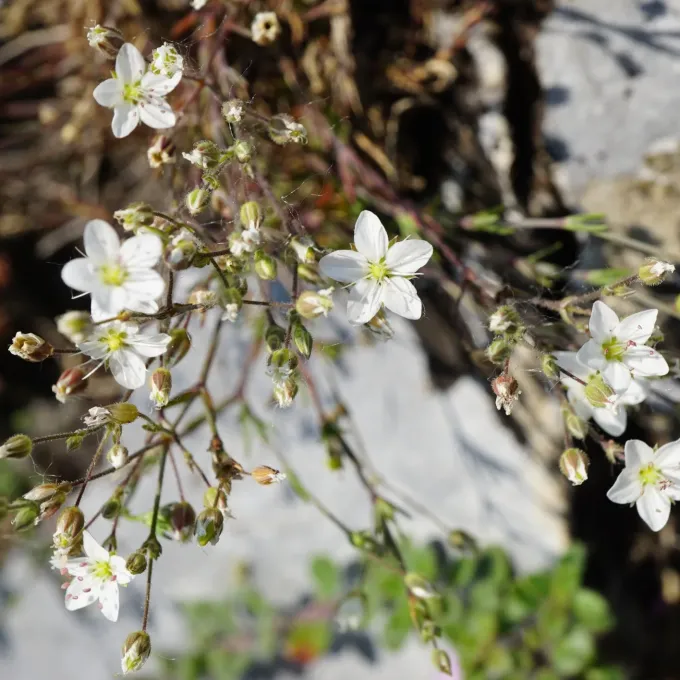
Description
Sowing dates
Minuartia glaucina belongs to the Caryophyllaceae family, which is known for its resilience and ability to thrive in harsh, rocky environments.
For successful propagation, it is recommended to sow the seeds during late autumn, allowing the cold winter period to naturally stratify the seeds for better spring germination.
The seeds are very fine and require shallow sowing depths, typically placed just beneath the soil surface to ensure optimal light exposure.
It is crucial to use a well-draining, gritty substrate that mimics the natural mineral soils where this species is typically found in the wild.
During the initial growth stages, maintaining a stable, cool environment helps to establish a healthy root system before the onset of summer heat.
Growing requirements
The plant requires full sun exposure throughout the day, as any shade can lead to leggy, weak growth and reduced vitality in the plants.
It prefers alkaline or neutral, mineral-rich soils that are poor in organic matter but possess excellent drainage characteristics.
Minuartia glaucina is highly drought-tolerant, having evolved to survive in habitats with limited access to water and high evaporation rates.
Proper airflow is essential for the health of the foliage, as high humidity combined with stagnant air can lead to various physiological stresses.
Competition control is vital; this species does not tolerate being crowded by more vigorous plants and requires a clean, weed-free growing area.
Main diseases and pests
The primary threats to the stability of Minuartia glaucina are root rot and fungal infections, which occur if the soil remains waterlogged for long periods.
These pathogens often thrive in compacted soils, making it necessary to incorporate gravel or coarse sand into the growing medium to prevent moisture retention.
Pest pressures can include aphids, which may cluster on tender new shoots and drain the plant's resources during the peak growth season.
Integrated pest management strategies focusing on ventilation and moisture control are the best ways to keep the population healthy and vigorous.
Careful monitoring of the leaf surface and root zones is recommended, especially after periods of unseasonable rainfall or high atmospheric humidity.