
Minuartia formosa
Minuartia formosa
Description
Growing requirements
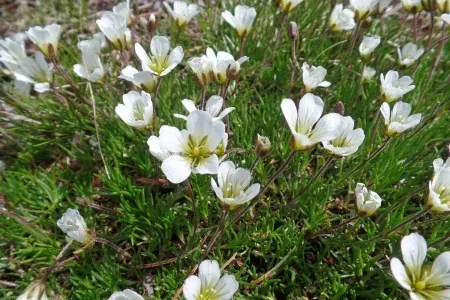
Minuartia formosa is a perennial herbaceous plant belonging to the Caryophyllaceae family. Known for its compact habit, it is native to high-altitude rocky environments, where it grows in crevices and on gravelly slopes, demonstrating significant resilience to harsh conditions.
Botanically, this species is characterized by its cushion-forming growth, consisting of densely packed, slender leaves. This adaptation allows the plant to thrive in nutrient-poor environments while effectively managing its moisture balance despite high exposure to wind and sun.
Cultivation requires conditions that mimic its natural habitat. A well-draining, stony, or sandy substrate is mandatory to prevent root rot. The plant should be situated in full sun, as it requires high light intensity to maintain its tight, mat-like form and to encourage consistent flowering.
Soil requirements focus on low fertility and excellent aeration. Over-fertilization should be strictly avoided, as it promotes succulent, weak growth that is susceptible to winter kill and pest infestations. Providing a layer of grit around the plant's base helps keep the foliage dry.
In terms of agricultural and horticultural use, it is a premium choice for rock gardens, trough gardens, and alpine xeriscaping. Its ability to colonize small gaps makes it highly valued for softening the edges of stone walls and paths in decorative landscape projects.
Main diseases and pests
The primary threat to Minuartia formosa is fungal disease, particularly root and crown rot caused by poor soil drainage or excessive atmospheric humidity. Wet winters or stagnant water after spring thaw are the most common stressors leading to plant decline.
Pests such as aphids can occasionally feed on the tender new growth during the spring season. While usually manageable, heavy infestations can weaken the plant, making it more susceptible to secondary environmental stress or opportunistic fungal pathogens.
Nematodes are another potential concern in heavy or contaminated soils. Infestation often results in patchy growth or localized dieback, which is difficult to treat. Prevention through the use of sterilized or clean gravelly media is the most effective management strategy.
Gastropods, including slugs and snails, can graze on the foliage, significantly affecting the aesthetic value of the cushion. Protective measures such as gravel mulching or the use of physical barriers are often necessary in damp environments where these pests are abundant.
Maintaining plant health relies heavily on cultural practices: promoting good air circulation, ensuring rapid water drainage, and avoiding heavy organic matter in the planting mix. Regular inspections allow for the early detection and management of both biotic and abiotic issues.