
Minuartia circassica
Minuartia circassica
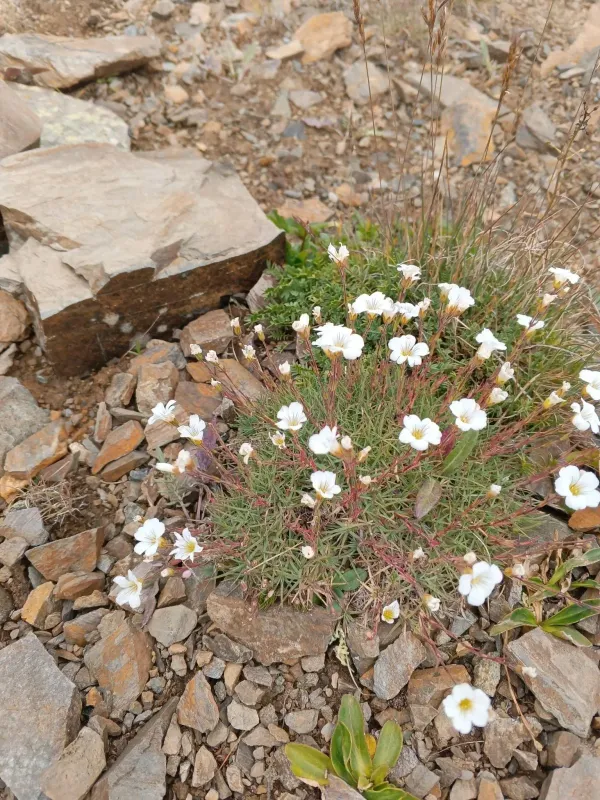
Description
Sowing dates
Minuartia circassica is a member of the Caryophyllaceae family, typically propagated through seeds or vegetative division. For successful seed germination, sowing should occur in early spring once soil temperatures reach 10-12 degrees Celsius.
Seeds require a period of stratification lasting 30 to 45 days at low temperatures to break dormancy. Sowing must be performed on the surface of a light, well-draining substrate, as the seeds need light exposure for optimal development.
When using container production, sow seeds in March. The seedlings develop slowly and require careful moisture management to prevent damping-off, which is a common risk for slow-growing alpine species in early stages.
Vegetative propagation is most effective when conducted through crown division in late summer or early autumn. This timing allows the plants to establish a root system before the onset of the dormant winter season.
Planting density should be managed to achieve a balanced spread; approximately 9-12 plants per square meter is considered standard for creating a dense, weed-suppressing mat in horticultural applications.
Growing requirements
As a species originating from Caucasian highlands, this plant requires high light intensity. Exposure to direct sunlight is crucial for maintaining the plant's compact, dense cushion habit, which loses its aesthetic appeal in shaded environments.
The ideal soil profile for Minuartia circassica consists of gritty, sandy, or rocky substrates with excellent permeability. Heavy clay soils must be avoided as they lead to root zone waterlogging and subsequent plant decline.
The plant demonstrates significant drought tolerance once established, making it suitable for low-maintenance alpine gardens. Watering should be regulated to keep the substrate moist but never saturated, particularly during the active growing season.
The plant exhibits high winter hardiness, well-adapted to cold climates. However, in regions with little snow cover, light protective mulching with organic materials or evergreen branches can help protect the foliage from harsh freezing winds.
Nutrient requirements are low. Fertilization should be strictly controlled, as excessive nitrogen results in weak, leggy growth that is more susceptible to disease and reduces the plant's natural tolerance to environmental stressors.
Main diseases and pests
Fungal pathogens are the primary threat to the health of this culture, especially when ambient humidity remains consistently high. Root rots and various leaf spots are the most common issues arising from poor air circulation or overwatering.
While insect pests like aphids or spider mites may occur occasionally, they rarely pose a severe threat if the plant is growing in its optimal environment. Monitoring and integrated pest management practices are sufficient for control.
Effective prevention strategies include the use of gravel or grit mulch around the base of the plant to keep the foliage dry and prevent direct contact with moist soil. This simple practice significantly reduces the risk of fungal infections.
Systemic fungicides may be employed in case of a severe infection, though they should be used judiciously. Maintaining proper plant spacing to facilitate airflow is the most effective biological control measure against disease progression.
Regular inspection of the root zone and immediate removal of any necrotic tissue are essential components of the plant's ongoing care, ensuring long-term survival and vitality in garden conditions.