
Minuartia cerastiifolia
Minuartia cerastiifolia
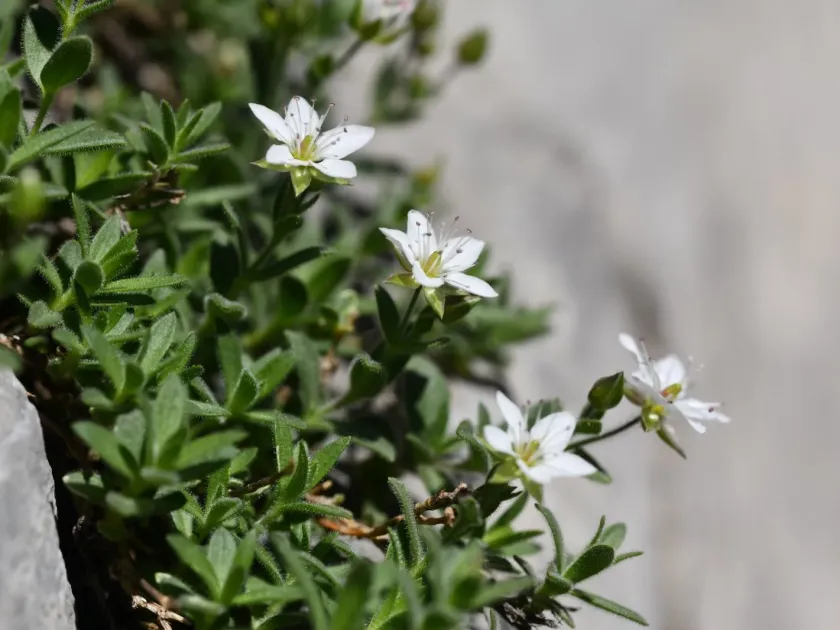
Description
Growing requirements
Minuartia cerastiifolia is a perennial herb belonging to the Caryophyllaceae family, renowned for its resilient nature in harsh mountainous environments. This species naturally occurs in rocky habitats where soil nutrients are minimal, yet drainage is exceptionally high.
The plant exhibits a mat-forming growth habit, producing small, dense clusters of leaves that adapt to varying light intensities. Its root system is specifically evolved to penetrate cracks and crevices, ensuring stability in shifting soil substrates common in mountain slopes.
For cultivation purposes, success depends on replicating these natural conditions, primarily through well-drained, porous soils. Soil mixtures should include a high percentage of grit, sand, or fine gravel to prevent any form of waterlogging that could be lethal to the plant.
Light requirements for Minuartia are significant; the plant demands full sun to maintain its dense, compact structure. Any shade-related elongation of the stems significantly reduces the plant's health and increases its vulnerability to various environmental stressors.
Water management is critical during the initial establishment phase, but once mature, the plant demonstrates remarkable drought tolerance. Over-irrigation is the most common error in managed landscapes, leading to rapid decay of the crown.
Main diseases and pests
Root rot is the primary physiological and pathological threat to Minuartia cerastiifolia. This condition is almost exclusively driven by high soil moisture levels coupled with low drainage efficiency, facilitating the proliferation of soil-borne pathogens.
Aphids can occasionally colonize the soft, new growth during the spring months, potentially stunting the development of flower buds. Integrated pest management, focusing on early detection and manual control, is typically sufficient to manage these infestations effectively.
Slugs and snails can cause damage to the foliage during periods of damp, cool weather. In such cases, perimeter protection methods are advised to prevent the pests from reaching the susceptible succulent tissues of the plant.
Fungal leaf spots may occur if air circulation around the plants is insufficient. Proper spacing during planting is essential to ensure that foliage dries quickly after rain or irrigation, thereby preventing the onset of moisture-related diseases.
Consistent maintenance, including the removal of dead or decaying foliage from the center of the mat, is a vital practice for preventing disease outbreaks and promoting vigorous new growth every single season.