
Minuartia capillacea
Minuartia capillacea
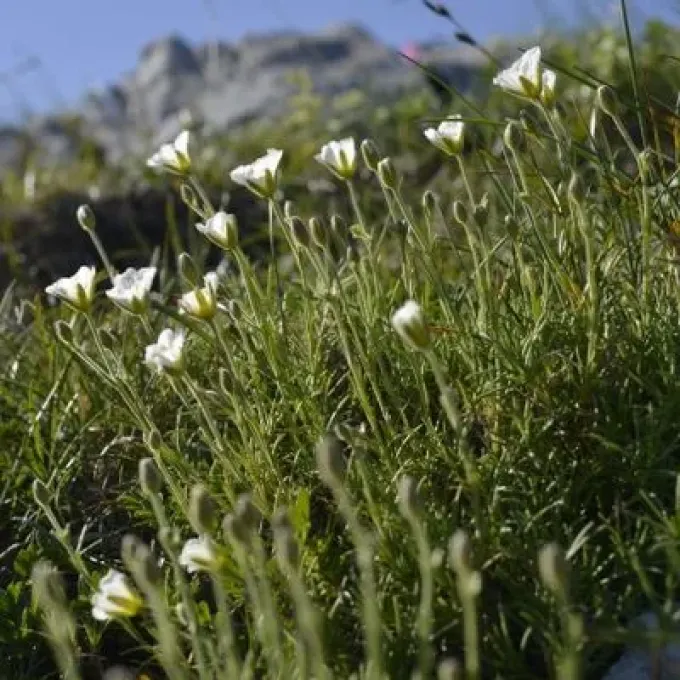
Description
Growing requirements
Minuartia capillacea is a perennial herbaceous plant belonging to the Caryophyllaceae family. Known for its distinct appearance, it typically thrives in rocky substrates, reflecting its adaptation to high-altitude or arid environments.
The botanical structure of the plant is characterized by thin, hair-like leaves that form dense, cushion-shaped mats. These cushions serve as a biological mechanism to preserve moisture and protect the root system from direct sun exposure and temperature fluctuations.
To cultivate Minuartia capillacea successfully, it is essential to provide a well-drained, nutrient-poor soil. The plant struggles significantly in heavy clay soils where moisture retention is high, making adequate drainage systems a necessity for healthy growth.
In terms of climate, the species prefers sunny locations with good airflow. It is highly resistant to cold temperatures, although it requires protection from excessive autumn rains, which can lead to fungal issues if the soil remains waterlogged for prolonged periods.
The primary agricultural and horticultural use of this species is in landscaping, specifically for rock gardens, gravel beds, and alpine features. It is valued for its ability to grow in challenging, stony environments where more sensitive plants would fail to thrive.
Main diseases and pests
The main threats to Minuartia capillacea are root rot and damping-off diseases caused by poor drainage. Preventing stagnant water is the most critical factor in mitigating these risks throughout the growing season.
Pests such as spider mites may occasionally infest the plants, particularly during hot and dry summer spells. Proper ventilation and maintaining balanced soil moisture are effective cultural practices to minimize these threats.