
Micromeria nervosa
Micromeria nervosa
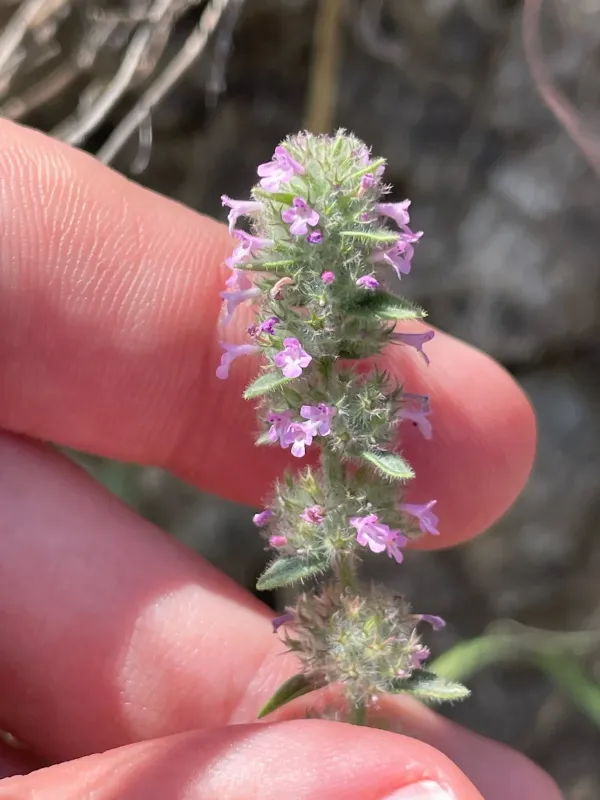
Description
Sowing dates
Micromeria nervosa is a perennial herbaceous plant belonging to the Lamiaceae family. It is highly valued for its aromatic properties and is often harvested as a variety of "mountain tea." Successful cultivation requires careful attention to seed preparation and initial sowing conditions.
Sowing should take place in early spring when soil temperatures stabilize between 15-18 degrees Celsius. Because the seeds are tiny and light-dependent, they must be sown on the surface and only lightly covered with soil to ensure optimal germination rates.
In large-scale farming, a nursery method is preferred. Starting seedlings in trays allows for better control over early growth stages and ensures that the plants are robust enough to survive transplanting into the field later in the season.
When transplanting, maintain a spacing of approximately 25-30 centimeters between plants. This distance is vital for promoting air circulation, which helps reduce the humidity around the base of the plant and prevents stem rot.
Early-stage weed control is essential for the crop's success. As Micromeria nervosa develops relatively slowly at first, manual or mechanical weeding is necessary to prevent competitive vegetation from suppressing young plants.
Growing requirements
This species thrives in well-lit, open locations that provide full exposure to sunlight. Being native to Mediterranean-style climates, it is adapted to high solar radiation levels, which also triggers the production of essential oils.
Soil requirements are quite specific: the crop requires excellent drainage. Sandy or calcareous loam soils are ideal. Any soil that tends to hold water will lead to root asphyxiation and the rapid development of fungal pathogens.
The plant is naturally drought-tolerant once established. It does not require frequent irrigation; in fact, overwatering is one of the most common mistakes in its cultivation. Rainfall is often sufficient for healthy development.
The optimal temperature for growth ranges from 20 to 28 degrees Celsius. While it can withstand cooler periods, the plant is susceptible to severe frost damage. In regions with harsh winters, protective mulching is recommended.
Agricultural management should focus on maintaining a moderate nutrient level. Excessive nitrogen fertilization is avoided, as it encourages excessive vegetative growth at the expense of aromatic compound concentration in the leaves and flowers.
Yield
The yield of Micromeria nervosa is measured by the total mass of dried leaves and floral stems. Peak yields are generally achieved in the second or third year of the plantation's life cycle as the plants become fully established.
Harvesting is performed during the full bloom phase, which corresponds to the highest concentration of volatile oils. In most climate zones, two cuts can be harvested per season, provided the weather conditions are favorable.
The yield quality is significantly impacted by the drying process. Drying should be done in well-ventilated, shaded facilities to ensure that the delicate essential oils do not evaporate due to excess heat or UV exposure.
Consistency in yield is maintained by periodically replacing older plants, as the vigor and aromatic potency of the crop naturally decline after 4 or 5 years of intense production.
Effective management includes monitoring the health of the plants after the first cut to ensure they have enough strength to regenerate for the second harvest. Proper irrigation during dry spells post-cut is beneficial.
Main diseases and pests
The primary threats to Micromeria nervosa are fungal infections, particularly root rot caused by poor soil drainage and waterlogging. These conditions are highly detrimental and can wipe out sections of the plantation rapidly.
Pests such as spider mites can infest the foliage during hot, dry periods. These mites weaken the plant by feeding on cell sap, which leads to stunted growth and a significant reduction in the quality of the essential oil output.
Aphids can also cluster on the tender tops of the plants, causing deformation and transmitting potential viral diseases. Biological control methods are preferred to preserve the organic integrity of the harvested material.
Powdery mildew is another major threat, especially if plants are grown too close together. Improving spacing and thinning out dense foliage are the best preventative measures against these fungal outbreaks.
- Root rot due to saturated soils.
- Spider mite infestations in arid conditions.
- Powdery mildew caused by poor airflow.
- Aphid pressure on new growth.
- Nutrient competition from persistent weed species.
Harvesting
Harvesting Micromeria nervosa is a precise operation that begins when the plant reaches full flowering. At this stage, the biological composition of the essential oils is perfectly balanced for pharmaceutical and culinary uses.
It is best to harvest in the morning hours once the dew has evaporated but before the mid-day heat peaks. This timing is essential to prevent the loss of volatile compounds caused by thermal stress.
The cut plant material should be handled with care and transported immediately to the drying facility. Prolonged exposure to sunlight after cutting will cause the leaves to lose their green color and their specific scent.
During the drying stage, the material should be spread in thin, uniform layers. Proper airflow is critical to prevent the growth of mold, which would render the entire batch unsuitable for commercial use.
Once dried, the product is processed by removing stems and sifting the leaf-flower mixture. Storage in cool, dark, and airtight containers is mandatory to ensure the longevity of the herb's quality and potency.