
Crested savory
Micromeria cristata
Description
Growing requirements
Crested savory (Micromeria cristata) is a perennial subshrub belonging to the Lamiaceae family. It is native to the Mediterranean basin, naturally occurring in rocky environments and arid mountainous regions, which defines its core biological needs.
The plant thrives in well-drained, nutrient-poor, and stony soils. It shows remarkable adaptation to calcareous substrates, making it an excellent candidate for cultivation on sites that are unsuitable for traditional crops due to rocky soil composition.
Climatic requirements focus on high sun exposure and heat. While the species is highly drought-tolerant, it requires a frost-free environment during its early developmental stages to ensure robust establishment in the field.
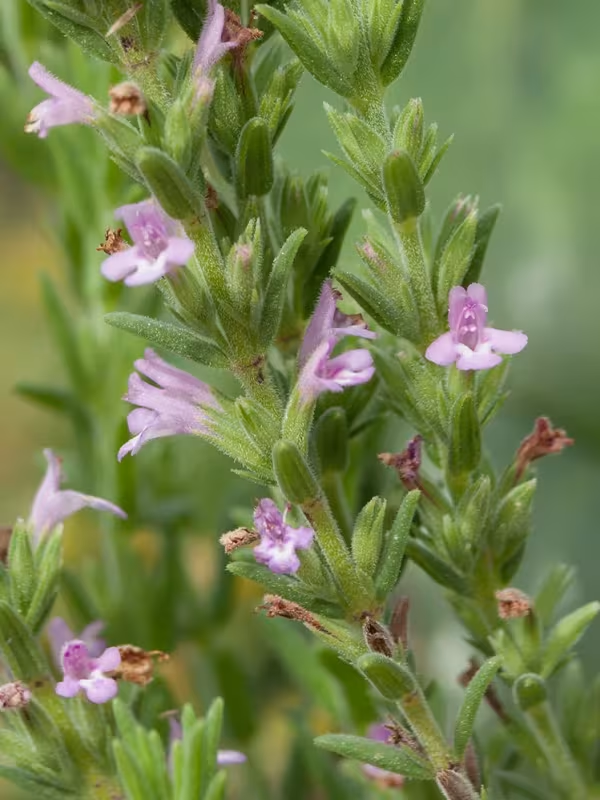
Botanically, Micromeria cristata is characterized by its woody base, slender stems, and dense clusters of small, fragrant flowers. It possesses a compact growth habit, which allows for high planting density in commercial production.
Soil management for this crop excludes excessive fertilization. Excessive nitrogen leads to rank growth at the expense of oil quality and structural integrity, therefore organic amendments should be applied sparingly to maintain natural plant vigor.
Harvesting
Harvesting the aerial parts of crested savory is performed during the peak flowering stage. This timing ensures the highest content of essential oils and terpenoids, which are the primary drivers of its market value in the pharmaceutical industry.
Technically, the stems are mowed or cut manually at the base, leaving sufficient foliage to support plant survival through the dormancy period. The harvest must occur during dry morning hours once the dew has evaporated.
Post-harvest handling requires immediate transfer to shaded drying facilities. Rapid drying prevents the degradation of volatile aromatic compounds that provide the plant with its distinct medicinal characteristics.
The crop is mainly utilized for the extraction of aromatic oils and as an ingredient in herbal medicine formulations. It is particularly valued for its antimicrobial and soothing properties in traditional remedies.
Storage of the finished product requires hermetic packaging to protect the volatile oils from oxidation. Proper storage conditions allow for an extended shelf life, maintaining the quality of the raw material for secondary processing.