
Yerba Buena
Micromeria douglasii
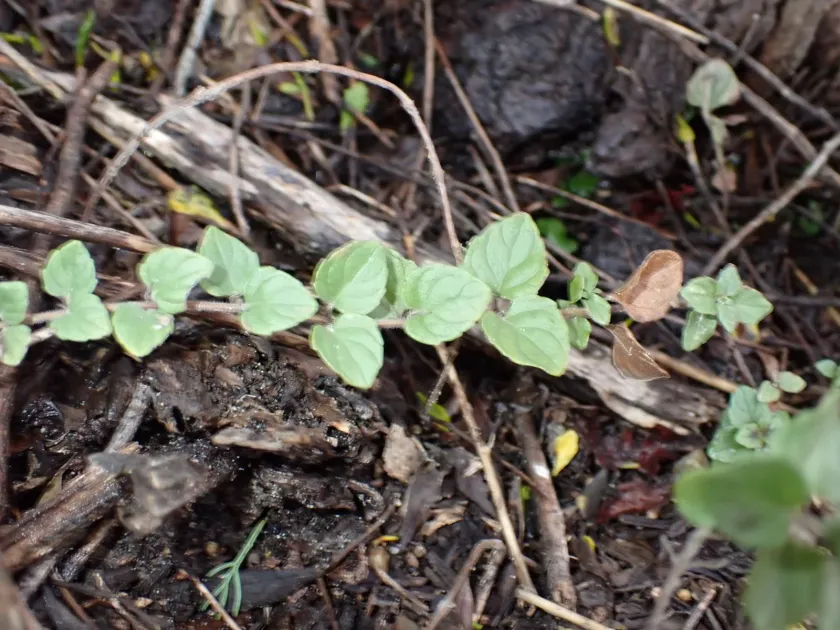
Description
Sowing dates
Yerba Buena (Micromeria douglasii), a member of the Lamiaceae family, is a perennial trailing herb valued for its refreshing aroma and traditional uses.
For optimal establishment, seeds should be sown in spring once the soil temperature is consistently above 12 degrees Celsius to ensure healthy germination.
Starting seeds in greenhouse trays in late winter is a recommended professional approach to ensure sturdy seedlings are ready for field transplanting by mid-spring.
The seeds require light for germination, meaning they should be sown on the surface of the soil rather than buried deep, ensuring good contact with the moist substrate.
Row spacing should be maintained at approximately 30 to 40 cm to allow for efficient weeding and to maintain adequate airflow between the plants during their growth stages.
Growing requirements
This crop thrives in well-draining, sandy-loam soils with a slightly acidic to neutral pH, preventing the risk of waterlogging which can be lethal to the root system.
While Micromeria douglasii can tolerate partial shade, it produces higher concentrations of essential oils when exposed to consistent sunlight throughout the day.
Regular, moderate moisture is essential, especially during the establishment phase, but once mature, the plant is relatively resilient to short periods of drought.
Soil should be rich in organic matter, though overly high levels of nitrogen fertilizer should be avoided to prevent excessive leafy growth at the expense of oil potency.
In colder regions, it is advisable to provide a layer of mulch around the base of the plants during winter to protect the roots from extreme freezing temperatures.
Yield
Yields of Yerba Buena are largely determined by the frequency of harvesting and the overall nutrient management of the plantation during the growing season.
Under favorable climatic conditions, it is possible to harvest the fresh biomass two or three times per year, provided the plants have sufficient recovery time.
The main commercial value lies in the essential oil content, which is harvested in its peak concentration during the early blooming stages of the plant cycle.
Well-maintained plantations can remain productive for several years, but routine management of weed competition and soil health is necessary to ensure consistent output.
The final yield is measured not only by the weight of the fresh foliage but also by the quality of the dried product or extracted oil, which requires careful processing.
Main diseases and pests
Common threats to this crop include fungal issues like powdery mildew, which often develop in environments with poor ventilation or high humidity levels.
Pests such as aphids and spider mites can be problematic, particularly during hot and dry spells, necessitating proactive monitoring and potential biological control.
Crop rotation is a vital practice to avoid the buildup of soil-borne pathogens, as the Lamiaceae family is susceptible to specific root diseases if replanted too frequently.
Effective weed management is essential not only for resource competition but also to reduce the number of potential host plants for various garden pests and diseases.
Early identification of pest infestations allows for targeted interventions that minimize the need for chemical treatments, preserving the aromatic profile of the herbs.
Harvesting
Harvesting is typically conducted at the beginning of the flowering phase when the plant's essential oil concentration is at its peak for optimal flavor and potency.
The stems should be cut 5 to 7 centimeters above the soil line, which encourages the plant to resprout and produce a subsequent harvest later in the season.
Post-harvest handling is critical; the foliage must be kept out of direct sunlight and moved quickly to a shaded drying area to preserve its aromatic volatile oils.
Drying should be performed at low temperatures, ideally below 35 degrees Celsius, to ensure the herbs retain their color, structure, and intense fragrance profile.
After the final harvest of the season, it is beneficial to provide the plants with a light watering and light fertilizing to support regrowth before the winter dormancy.