
Echeveria elegans
Echeveria elegans Rose
Description
Growing requirements
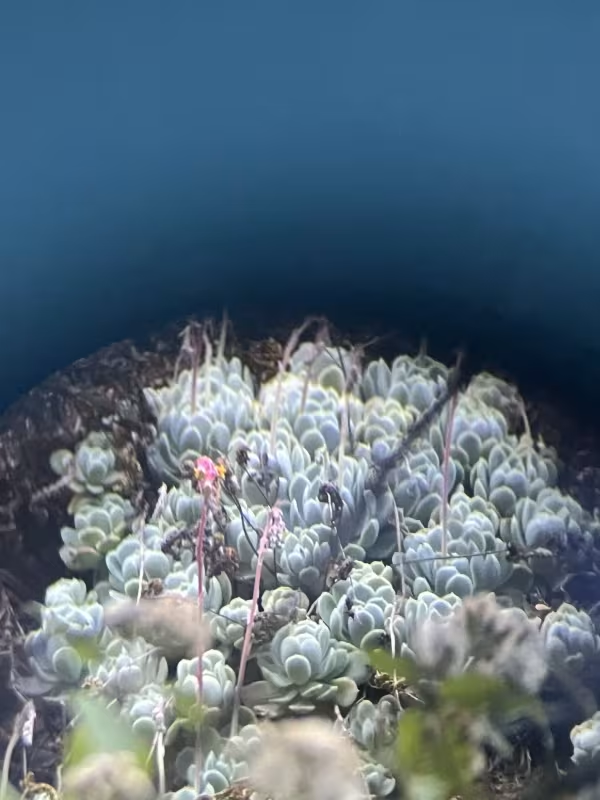
Echeveria elegans, commonly known as the Mexican snowball, is a perennial succulent belonging to the Crassulaceae family. Originating from the semi-desert regions of Mexico, this plant has adapted to rocky, well-draining soils and high-altitude sunlight, resulting in its iconic rosette shape.
The botanical structure of the plant consists of thick, waxy, pale blue leaves arranged in a dense, compact rosette. This succulence allows the plant to store water during periods of drought, while the thick epicuticular wax layer minimizes transpiration losses under intense solar radiation.
For optimal growth, this species requires a minimum of six hours of bright, direct sunlight daily. In an indoor setting, supplemental lighting may be necessary during winter months to prevent etiolation, where the stem stretches unnaturally and the rosette loses its aesthetic symmetry.
Agricultural success depends on the substrate composition, which must be highly porous and inorganic. A professional soil mix for Echeveria includes coarse sand, perlite, and a small fraction of loam, ensuring that water drains almost immediately to protect the root system from asphyxiation.
Temperature management is critical for the lifecycle of Echeveria elegans. While it thrives in warm temperatures between 20°C and 25°C, it requires a period of dormancy during the winter with cooler temperatures between 10°C and 12°C to stimulate flowering and maintain vigor.
Main diseases and pests
The primary agricultural threat to Echeveria elegans is root rot, triggered by overwatering and poor soil drainage. When the roots remain in a saturated environment for an extended period, they quickly succumb to fungal pathogens, leading to the collapse of the plant's structural integrity.
Mealybugs are the most common pests affecting this species. They typically settle in the tight spaces between leaves and at the base of the rosette, where they feed on sap. Their presence is often indicated by white, cotton-like masses, which can quickly spread to adjacent plants.
Control strategies involve the immediate isolation of infected specimens. Application of systemic insecticides is recommended to eliminate hidden populations that are physically inaccessible to contact sprays. Ensuring good air circulation around the plants acts as a significant deterrent to infestation.
Bacterial soft rot is another severe condition, often caused by water becoming trapped within the leaf rosette. This leads to the rapid disintegration of healthy tissue. To prevent this, it is advised to use bottom-up watering techniques or careful irrigation directed strictly at the soil surface.
Root aphids pose a hidden danger, often colonizing the root zone and forming a waxy secretion that repels water. Regular repotting and inspection of the root ball are essential practices to ensure the long-term health and productivity of the succulent collection.