
Mealy sage
Salvia farinacea Benth.
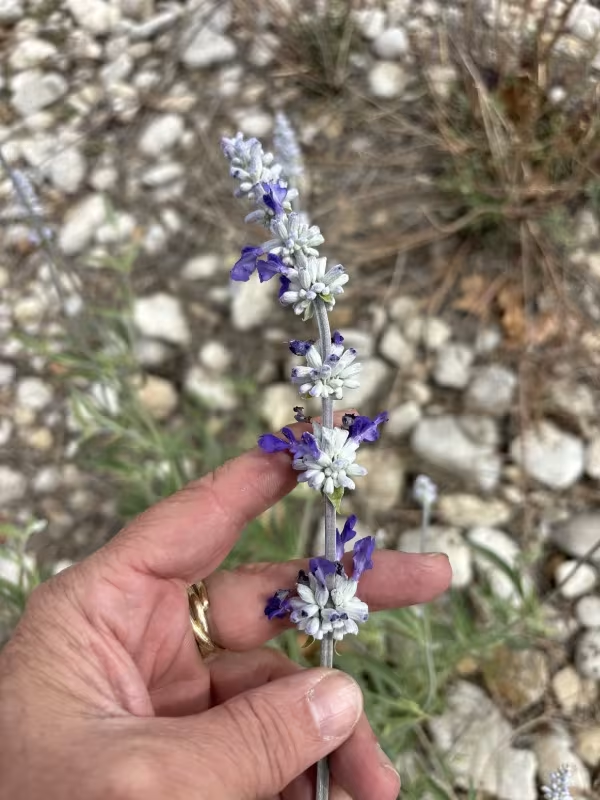
Description
Sowing dates
Salvia farinacea, commonly known as mealy sage, is a herbaceous perennial belonging to the Lamiaceae family. It is native to the United States, specifically Texas and New Mexico.
Seeds should be sown indoors 8 to 10 weeks before the last expected frost date. Light is essential for germination, so seeds must not be buried deeply into the growing medium.
Maintaining a temperature between 20°C and 22°C is crucial for successful seed starting. Using a seedling heat mat can help maintain consistent soil temperatures during this phase.
Transplanting seedlings to individual pots should occur once the first set of true leaves develops, ensuring the plants have enough space to build a strong root system.
Hardening off the plants before planting them in a permanent sunny location outdoors is a vital step to minimize transplant shock and encourage rapid growth.
Growing requirements
Mealy sage thrives in full sun, requiring at least six to eight hours of direct light per day for optimal bloom production and foliage density.
Well-drained soil is a non-negotiable requirement for this species. It performs best in sandy or loamy soils but struggles in heavy, waterlogged clay environments.
While the plant shows good tolerance to moderate drought, consistent moisture during the early establishment phase is necessary for a healthy, robust plant structure.
A balanced fertilizer application at the beginning of the growing season can improve flower color and plant vigor, though it should not be applied excessively.
Adequate air circulation around the plants is essential, especially in humid climates, to prevent the buildup of fungal pathogens and pests on the leaves.
Main diseases and pests
Powdery mildew is the most common fungal disease, appearing as a white, dusty layer on the foliage, often exacerbated by high humidity and stagnant air.
Pests such as aphids and spider mites may infest the plant, particularly in sheltered or indoor environments, causing leaf yellowing and stunted development.
Root rot is a significant risk if the soil remains wet for prolonged periods. Ensuring the drainage is perfect is the primary preventative measure against this threat.
Whiteflies can also affect the plant during the mid-summer heat, requiring consistent monitoring and, if necessary, the application of appropriate biological controls.
Integrated pest management, including physical removal of infested leaves and correct watering habits, is the best strategy to maintain a healthy garden display.
Harvesting
For use in fresh flower arrangements, stems should be harvested early in the morning when the blossoms are just beginning to open along the flower spike.
For dried floral projects, harvest the stems when the flowers are fully developed. Hang them upside down in a cool, dark, and well-ventilated space to preserve color.
Deadheading faded flower spikes throughout the season encourages the plant to produce a second flush of blooms, maintaining its aesthetic value into the autumn.
Seed collection involves cutting the dry spikes after the flowers have dropped and the seed pods have turned brown, then storing them in paper bags.
In regions where the plant is grown as an annual, the entire plant can be cleared and composted at the end of the season to clean the bed for the following cycle.