
Maderan stock
Matthiola maderensis
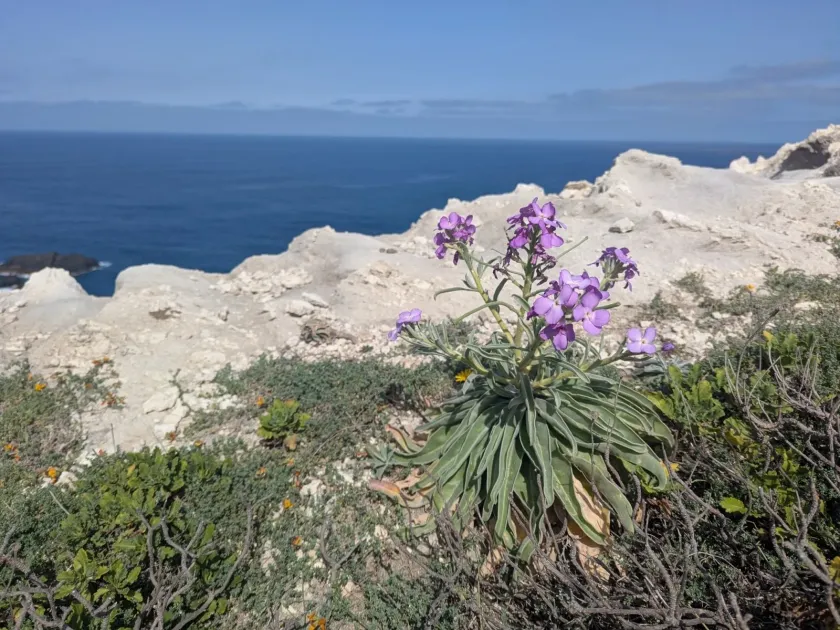
Description
Growing requirements
Maderan stock (Matthiola maderensis) is a distinctive perennial plant belonging to the Brassicaceae family. It is native to the island of Madeira, where it grows in rocky and coastal habitats.
The plant thrives in well-drained, nutrient-poor, rocky substrates. Its ability to tolerate salt-laden winds makes it an excellent candidate for coastal landscaping in suitable climates.
Full sun exposure is a critical requirement for this species. It demands high levels of light to maintain its structural integrity and to produce healthy, vibrant floral displays.
Temperature regulation is essential for successful growth. The species performs best in a Mediterranean-like climate, avoiding both extreme heat and heavy, prolonged frosts.
Irrigation management is vital for the health of Matthiola maderensis. Cultivators should ensure the soil dries out slightly between watering cycles to mimic its natural environment and avoid root decay.
Main diseases and pests
The plant is susceptible to typical Brassicaceae pests, such as flea beetles, which can cause significant foliar damage by creating small holes in the leaves during the seedling stage.
Aphids are a frequent concern, particularly during the flowering season. They tend to gather on the soft, developing buds, which can lead to deformed growth and stunted stems.
Fungal diseases like damping-off are common if the substrate remains waterlogged. Proper aeration of the root zone and avoiding overcrowding are the best preventative measures.
Caterpillars of various white butterfly species (Pieridae) may feed on the foliage. Manual removal or the use of targeted biological controls is usually effective for small-scale gardening.
Mildew can develop under conditions of high humidity and poor air circulation. Ensuring the plant is kept in an open, well-ventilated location significantly mitigates the risk of fungal outbreaks.