
Rough stock
Matthiola aspera
Description
Growing requirements
Matthiola aspera, commonly known as rough stock, is a herbaceous plant belonging to the Brassicaceae family. It is distinguished by its unique adaptation to specific environmental conditions, making it an interesting subject for both botanical study and horticultural practice.
The crop thrives in well-drained, sandy or loamy soils with a neutral pH balance. It requires significant exposure to sunlight to achieve optimal growth and flowering; therefore, site selection is a critical factor for successful production in any agricultural setting.
Climatically, Matthiola aspera prefers moderate temperature ranges. It is relatively resilient but requires protection from extreme weather conditions, particularly high winds that may physically damage its stems during the peak of its vegetative growth cycle.
Agronomic management involves standard practices such as regular weeding and the maintenance of soil aeration. Balanced fertilization, focusing on phosphorus and potassium before the onset of the flowering stage, helps to enhance the overall vigor and quality of the plant.
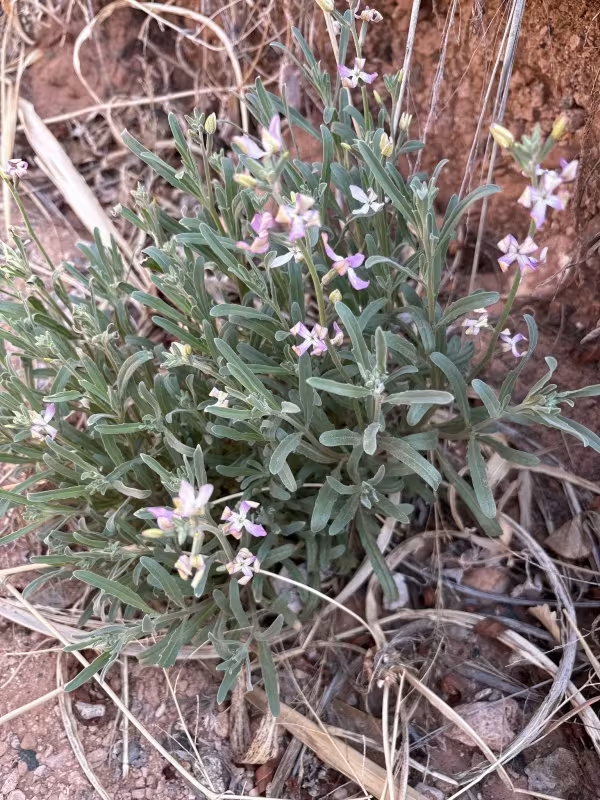
Botanically, the plant is characterized by its distinctively textured, hairy foliage. This characteristic allows it to better survive periods of low water availability by reducing the rate of transpiration, demonstrating its evolutionary capacity for survival in harsh conditions.
Main diseases and pests
Fungal diseases remain the most significant threat to the health of Matthiola aspera. Clubroot, common among many Brassicaceae members, can severely damage the root system, often leading to total plant failure if the soil drainage is inadequate.
Powdery mildew represents another common concern, particularly in areas with fluctuating humidity and poor air circulation. Regular monitoring and the application of appropriate fungicides can effectively manage these issues and ensure the survival of the crop.
Insect pests, most notably flea beetles, pose a major risk to young seedlings. These insects can cause rapid and significant foliage damage, necessitating early intervention and potentially the use of protective covers or targeted insecticidal treatments.
Aphids can also congregate on the stems and undersides of leaves, causing structural deformation and stunt in growth. Effective pest management strategies should focus on early detection through frequent scouting of the fields throughout the entire growing season.
Implementing a strict crop rotation policy is essential to break the life cycles of soil-borne pathogens and pests. By alternating with non-Brassicaceae crops, producers can significantly reduce the pressure of typical diseases on their fields.