
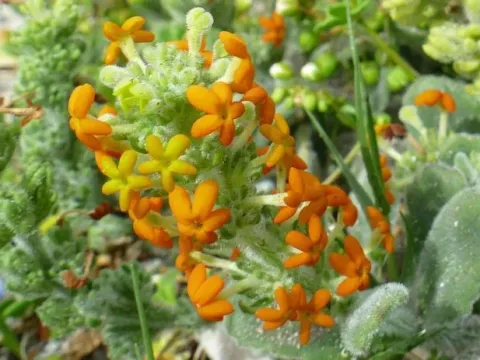
Manulea
Manulea
Sowing Manulea seeds in temperate regions is typically carried out in March or April using seed trays. The seeds are extremely small, so they should be distributed over the surface of moist substrate without covering them with soil, and then covered with glass to maintain consistent humidity.
What the section contains


Manulea
The prepared seedlings are planted in open ground only after the threat of night frosts has passed completely. In southern regions, direct sowing is possible at the end of April, but the container method remains preferred for better control of soil quality.
To ensure uniform germination, seeds require a temperature of about 20–22 degrees Celsius and bright, diffused light. It is essential to ensure that the top layer of soil does not dry out, otherwise, the seedlings may perish during the early stages of development.
Pricking out of seedlings is performed when two or three true leaves appear, transplanting them into individual containers or peat pots. This process helps in developing a stronger root system, which is critical for the plant's subsequent establishment in the garden.
Before planting in their permanent location, seedlings must be hardened off, gradually acclimatizing them to temperature fluctuations and direct sunlight. This hardening process takes at least 10–14 days, which significantly reduces transplant shock.
Manulea, a member of the Scrophulariaceae family, prefers open, sunny locations where the plant can fully reveal its decorative potential. In partial shade, the plant's stems tend to stretch excessively, and the intensity of flowering is noticeably reduced.
The soil for Manulea should be loose, fertile, and possess excellent drainage properties. The plant reacts negatively to standing moisture near the root collar, which quickly leads to the development of root rots and the loss of the plant.
The optimal pH range for this crop is slightly acidic to neutral. In heavy clay soils, it is recommended to incorporate drainage materials such as coarse sand or perlite to ensure adequate airflow for the roots.
During the active growing season, the plant requires regular but moderate watering. In hot summer periods, it is important to prevent the root ball from drying out, as Manulea quickly loses turgor, which negatively impacts the number of developing flower spikes.
To maintain decorative quality, apply complex mineral fertilizers with high potassium and phosphorus content. Regular deadheading of spent inflorescences stimulates the formation of new buds, extending the flowering period until the first frosts.
The primary threat to Manulea when grown in high-humidity conditions is fungal disease. Powdery mildew often affects the leaves, covering them with a characteristic whitish coating, which requires immediate treatment with appropriate fungicides.
Pests such as spider mites can cause significant damage during hot and dry weather. Their presence is indicated by fine webbing on the underside of leaves and the appearance of yellow spots, leading to the gradual wilting of the aerial parts.
Aphids are also frequent visitors to young shoots and buds, sucking cell sap and weakening the plant's immunity. Control measures involve both biological methods and the application of systemic insecticides.
Root rot, resulting from waterlogged soil, is the most dangerous condition as it is often detected only at the wilting stage. Prevention relies on strict control of watering regimes and the use of sterilized soil medium.
Regular inspection of the plants helps in early detection of infection sites. Removing affected parts and maintaining proper spacing between plants improves ventilation, minimizing the risk of disease spread.