
Manulea caledonica
Manulea caledonica
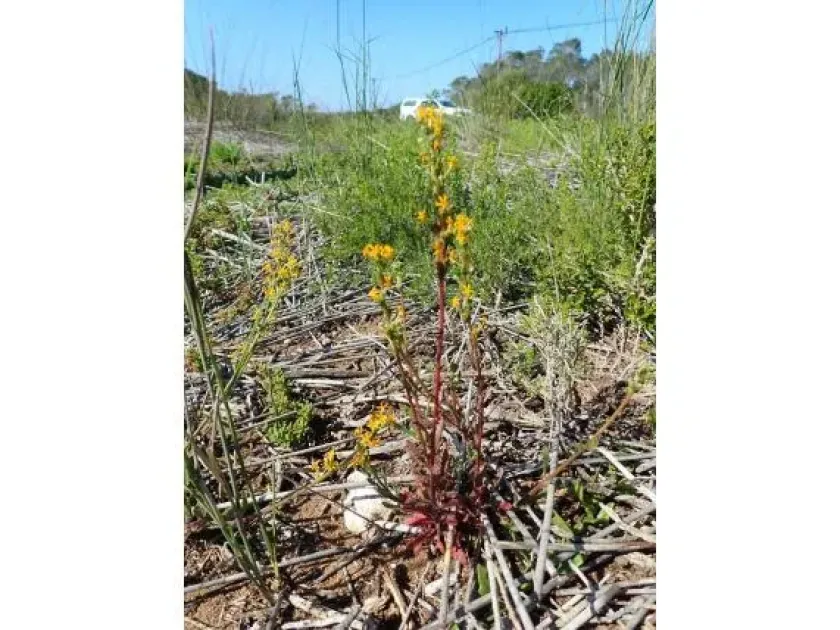
Description
Sowing dates
Manulea caledonica is a member of the Scrophulariaceae family. This delicate flowering plant is appreciated for its aesthetic value and is often treated as an annual in cooler climates.
Sowing starts in late winter or early spring in a greenhouse or indoors. Seeds are very fine and must be sown on the surface of a fine-textured, moisture-retentive seed starting mix.
Light is essential for germination, so the seeds should not be covered with soil. A light dusting of vermiculite can be used to help maintain humidity without blocking light.
Seedlings should be thinned or transplanted when they are large enough to handle. Hardening off is necessary before transplanting them into the final outdoor location.
Planting density is crucial; adequate spacing ensures that air circulates freely around the foliage, which is vital for preventing stem rot.
Growing requirements
This species thrives in full sun, which is necessary to maintain a compact growth habit and encourage a profuse blooming period throughout the season.
Well-drained soil is non-negotiable for Manulea. Any soil type, including sandy or loamy soils, is suitable provided it does not retain standing water after rain.
Watering should be balanced. While the plant shows some tolerance to dry conditions, consistent moisture is required during the initial establishment phase.
Soil fertility can be managed with a slow-release balanced fertilizer applied at the beginning of the growing season to support continuous flowering.
In cooler regions, container gardening is recommended so that plants can be moved if temperatures drop unexpectedly during the late spring season.
Main diseases and pests
Root rot is the most significant threat to the health of the plant, usually triggered by poor drainage or overwatering in heavy soil conditions.
Powdery mildew can affect the foliage during periods of high humidity and poor air circulation, necessitating prompt attention to plant spacing and sanitation.
Aphids are the most common insect pests that feed on the soft growing tips and buds, potentially distorting the flowers and hindering development.
Integrated pest management, including the use of insecticidal soaps, is effective in keeping infestations under control without damaging the plant tissues.
Regular monitoring of the plantation is required to detect early symptoms of pathogen outbreaks, allowing for quick intervention and prevention of wider spread.