
Malay apple
Syzygium malaccense (L.) Merr. et Perry
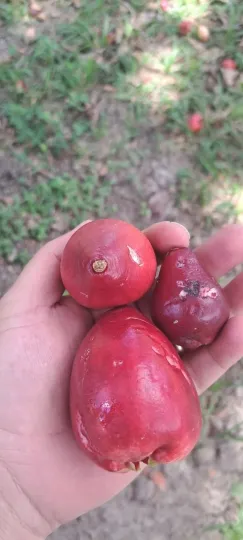
Description
Growing requirements
The Malay apple (Syzygium malaccense) is a significant tropical tree species belonging to the Myrtaceae family. It is native to Southeast Asia and thrives in humid tropical environments with consistent rainfall.
The crop requires deep, fertile, and well-drained soils to prosper. It is particularly sensitive to waterlogging, so location selection with appropriate soil drainage is essential for successful orchard establishment.
Climate adaptation is restricted to tropical zones. The tree cannot tolerate frost or temperatures below 10–15°C. It prefers locations protected from strong, drying winds which can cause leaf scorch.
Regular irrigation is vital during the establishment phase and in areas with distinct dry seasons. Mulching around the base of the tree is a recommended practice to maintain soil moisture and suppress weed growth.
Proper spacing is required to ensure optimal canopy development. Standard planting distances range from 8 to 12 meters, depending on the specific cultivar and soil fertility levels.
Yield
Malay apple trees are known for their high yields. Depending on environmental conditions and tree maturity, an established tree can produce substantial fruit harvests annually.
The fruits are bell-shaped or ovoid, with thin skin and juicy, crispy flesh. They are prized for their refreshing flavor and are consumed fresh, cooked in syrups, or processed into preserves.
Flowering occurs in flushes, leading to multiple harvest periods throughout the year in optimal tropical climates. This allows for a continuous supply of fresh produce in local markets.
Beyond culinary use, the tree has historical significance for its dense and durable wood, often utilized in local handicrafts and traditional construction in its native range.
Harvesting efficiency relies on skilled manual labor, as the fruits must be picked individually to prevent bruising and to maintain quality for commercial distribution.
Main diseases and pests
Fruit flies represent the primary economic threat to Malay apple production. They infest the ripening fruit, significantly reducing the marketable portion of the harvest.
Fungal pathogens such as leaf spot and various rots can affect the tree, especially in environments with poor air circulation or prolonged high humidity levels.
Scale insects and aphids can cause damage by feeding on young foliage and stems. These pests often attract sooty mold, which impairs photosynthesis and overall tree health.
Integrated Pest Management (IPM) strategies, including the use of pheromone traps and biological controls, are highly recommended to protect fruit quality while maintaining environmental safety.
Routine canopy maintenance, including the removal of dead or crossing branches, is necessary to reduce the microhabitat suitable for pest breeding and disease spread.