
False Solomon's seal
Maianthemum racemosum
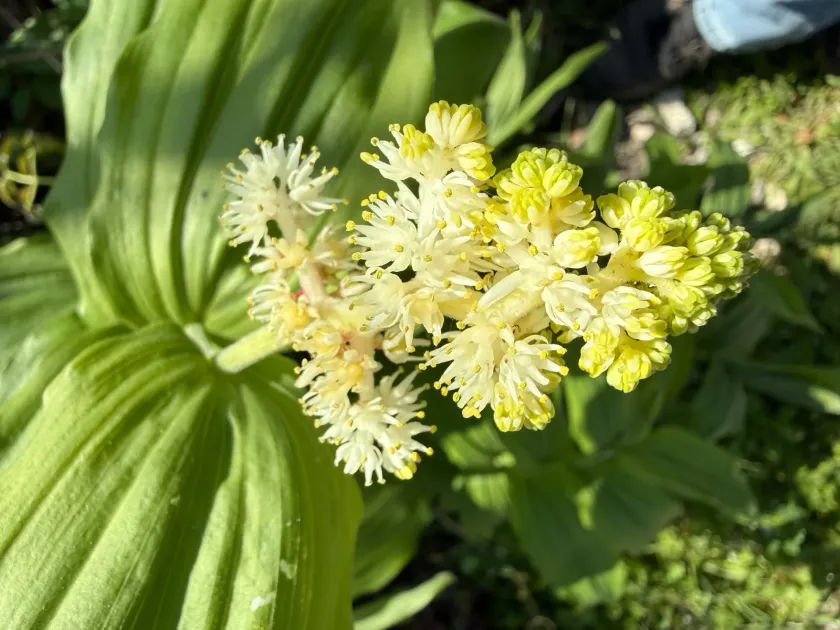
Description
Growing requirements
False Solomon's seal (Maianthemum racemosum) is a long-lived perennial belonging to the Asparagaceae family. It is widely recognized for its arching stems and fluffy white inflorescences that appear in late spring.
Native to North American woodlands, this plant thrives in partial to full shade. It is an excellent choice for woodland gardens, providing an elegant structure to shaded areas where other plants might struggle.
The soil should be rich, moist, and well-draining, with a slightly acidic to neutral pH. Incorporating organic matter, such as leaf mold or well-rotted compost, ensures the best growth and vigor for the plant.
Consistency in moisture levels is key to success. While the plant can tolerate short periods of dryness once established, regular irrigation during summer droughts is highly beneficial for leaf quality.
Mulching is a recommended cultural practice to keep the root system cool and retain soil moisture. The plant is hardy and adapts well to various temperate climates, returning year after year with minimal maintenance.
Main diseases and pests
False Solomon's seal is generally considered a low-maintenance and disease-resistant plant. It rarely suffers from severe pathological issues when grown in the appropriate environmental conditions.
The most common pests are slugs and snails, especially in early spring when the tender young shoots emerge. Protective measures such as barriers or organic slug bait can be used to prevent significant damage.
Root rot is the primary physiological threat, usually caused by poor soil drainage. Ensuring that the planting site does not become waterlogged is the most effective preventative measure against this issue.
Aphids can occasionally cluster on the flower buds or young leaves. Usually, a strong spray of water is sufficient to dislodge them, eliminating the need for any chemical interventions.
Maintaining proper plant spacing encourages good air circulation, which naturally limits the potential for fungal diseases. Routine garden sanitation helps keep the area free from potential inoculum.