
Maianthemum dilatatum
Maianthemum dilatatum
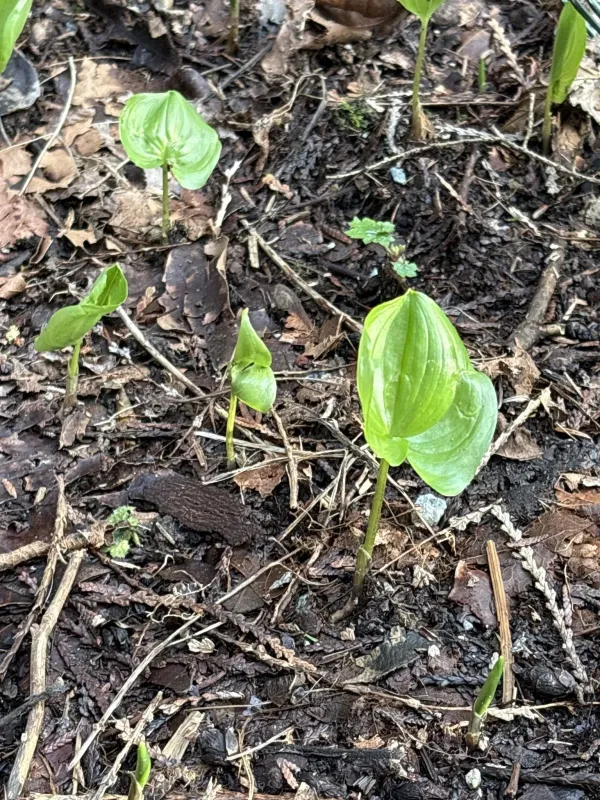
Description
Growing requirements
Maianthemum dilatatum is a herbaceous perennial belonging to the Asparagaceae family. It is a rhizomatous geophyte known for its ability to form dense, spreading carpets in cool, forested environments.
The native range of this species extends across the Russian Far East, Japan, and the Pacific Northwest of North America. It thrives in high-humidity habitats, particularly in coniferous or mixed deciduous forests.
The cultural requirements for this plant emphasize shade and moisture. It performs best in nutrient-rich, humusy, and slightly acidic soils that maintain constant moisture without becoming waterlogged.
Botanically, it is distinguished by its heart-shaped leaves and terminal racemes of small, white flowers. Its growth habit is primarily horizontal, with creeping rhizomes that facilitate quick establishment in favorable shady locations.
In terms of хозяйственное usage, it is primarily employed as an ornamental groundcover. It is highly valued in horticulture for filling gaps in woodland gardens and shaded perennial borders where other plants might fail.
Main diseases and pests
The primary horticultural challenge for this species is fungal leaf spot disease, which may develop if humidity is excessively high and air circulation around the foliage is poor.
Insects such as slugs and snails are the most common pests, as they feed on the soft leaf tissues. Monitoring and the application of integrated pest management are recommended to maintain foliage health.