
Macaranga tanarius
Macaranga tanarius
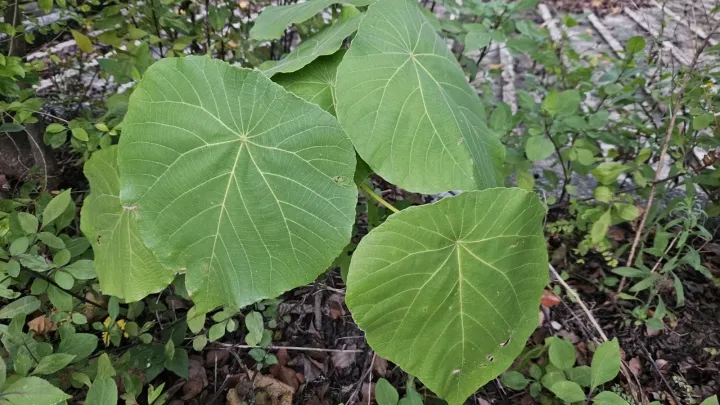
Description
Sowing dates
Propagation of Macaranga tanarius in the wild primarily occurs through seeds, which exhibit high viability after a dormancy period influenced by environmental cues. In controlled environments, seeds should be pre-treated to encourage uniform germination.
Sowing should be performed in a well-drained, nutrient-rich substrate that mimics forest soil. Consistency in moisture levels is critical during the initial weeks, as seeds are sensitive to both drought and waterlogging.
Optimal temperatures for seed germination range between 22 and 26 degrees Celsius. Providing a stable, warm environment significantly improves the success rate of seedling establishment.
Young seedlings require partial shade during their early growth stages to protect them from intense direct sunlight. Once they reach a height of approximately 20 to 30 centimeters, they can be transplanted to their final growing location.
Known for its aggressive growth rate, this species is highly favored in reforestation programs where rapid soil stabilization and biomass production are the primary objectives.
Growing requirements
Macaranga tanarius is a member of the Euphorbiaceae family and serves as a classic pioneer species in secondary tropical forests. It thrives best in areas with high solar exposure, as it requires significant light to sustain its fast growth.
While the plant is adaptable to various soil types, it performs best in loose, fertile loams. Its ability to tolerate varying pH levels makes it a versatile option for restoration projects in diverse tropical regions.
Adequate water supply is essential for maintaining its lush canopy. Although it possesses some tolerance to short-term dry spells, sustained drought conditions can significantly hinder its development and biomass yield.
Tropical temperatures are a fundamental requirement for this species. It does not tolerate frost or prolonged cool weather, which can lead to metabolic slowdowns and stunted growth.
When cultivated in plantation settings, it is important to provide sufficient spacing between trees to prevent nutrient competition and to ensure each individual receives enough sunlight for optimal canopy development.
Yield
The economic value of Macaranga tanarius is largely driven by its biomass production, which is utilized in the cellulose and pulp industry. Its rapid growth cycle allows for frequent harvesting rotations.
The leaf litter produced by the plant acts as a valuable organic fertilizer, helping to restore soil fertility in degraded areas. This makes it an essential species for sustainable agroforestry systems.
The resin extracted from the bark and stems holds industrial applications, particularly in the production of natural adhesives and protective coatings for wood.
In terms of agricultural yield, the plant's fast biomass accumulation is directly proportional to the amount of light and water it receives. Optimal plantation management can result in high annual yields.
Beyond industrial use, the plant also serves ecological purposes, contributing to local biodiversity and providing shelter for various species within tropical habitats.
Main diseases and pests
Despite its robustness, Macaranga tanarius can be susceptible to fungal leaf spots, especially in regions with excessively high humidity or poor air circulation. Proper spacing is the most effective preventative measure.
Pests such as lepidopteran larvae can occasionally cause defoliation. In plantation settings, monitoring and maintaining the health of the surrounding ecosystem can help manage pest populations naturally.
Root rot caused by waterlogging is a potential threat that can quickly compromise plant health. Implementing efficient drainage systems is crucial for preventing such issues in low-lying areas.
Aphids may target tender young shoots during the dry season. While usually manageable, severe infestations may require targeted biological controls to protect the growing tips.
- Perform regular visual inspections for fungal symptoms.
- Ensure proper drainage to prevent root issues.
- Prune dead or diseased branches to maintain canopy health.
- Control competing weeds during the early establishment phase.
Harvesting
Industrial harvesting is conducted based on the specific end-use of the tree. For wood pulp production, selective thinning is often practiced to manage the forest density and optimize future yields.
Resin collection requires skilled handling, involving careful incisions in the bark to extract the substance without causing excessive damage to the tree's vascular system.
Leaf harvesting, when intended for soil amendment or fodder, is done during peak vegetative growth phases. It is vital to dry the collected mass promptly to avoid spoilage in humid environments.
When used for reforestation, harvesting is restricted to minimal interventions, allowing the tree to propagate naturally through its own seed bank.
It is recommended to schedule all harvest activities during dry periods. This helps minimize the risk of pathogens entering the plant through fresh cuts, which is a common problem in tropical climates.